The key to these Rhude graphic tees isn't simply determining if they run 'big' or 'small,' but understanding how the boxy cut simultaneously affects shoulder width, chest, length, and hem. The product page indicates this series uses combed cotton with a listed fabric weight of 180–250g, features a relaxed fit, and is available in S through XXL with multiple colorways. Because fit feedback varies across sizes and body ty
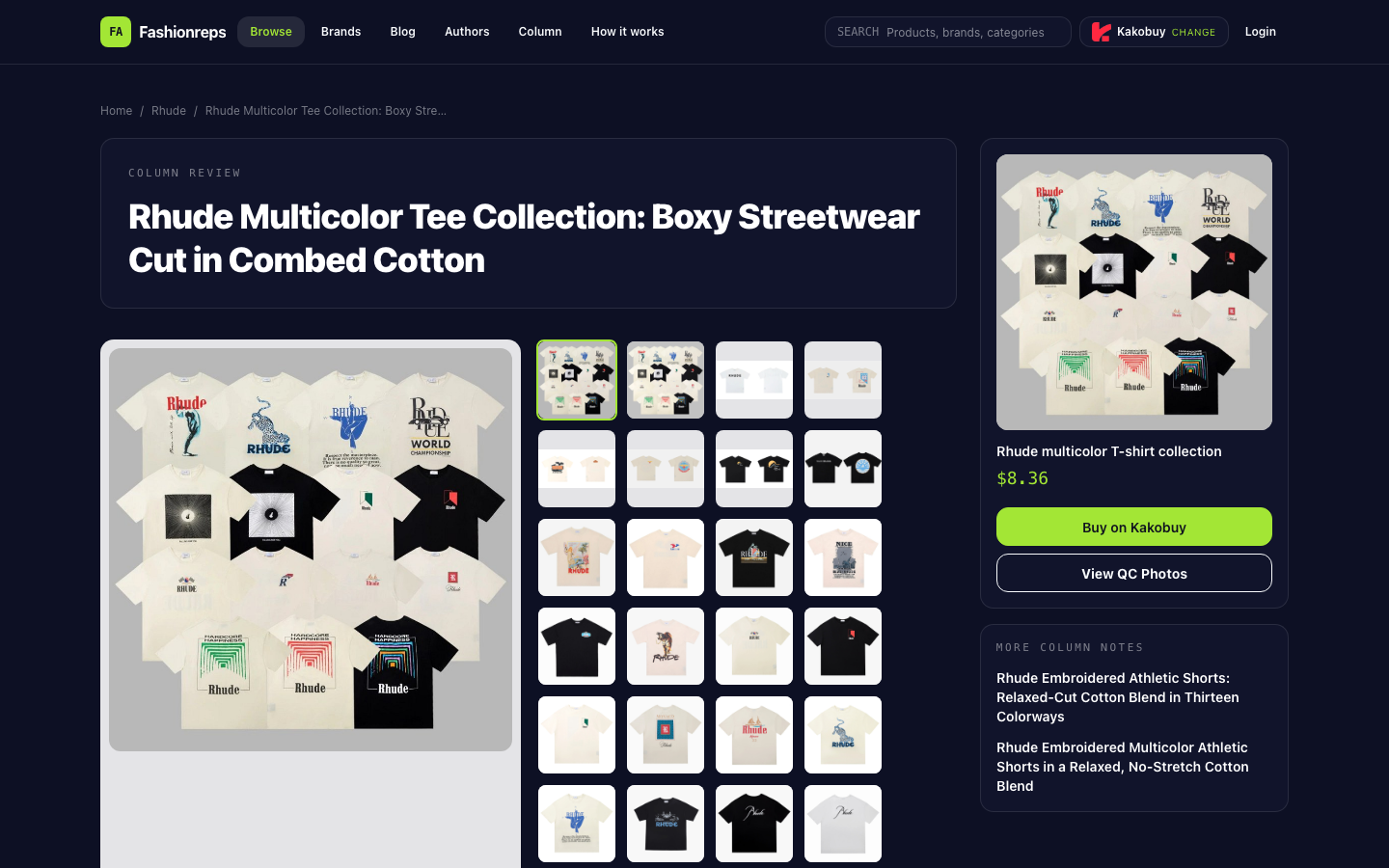
The key to these Rhude graphic tees isn't simply determining if they run 'big' or 'small,' but understanding how the boxy cut simultaneously affects shoulder width, chest, length, and hem. The product page indicates this series uses combed cotton with a listed fabric weight of 180–250g, features a relaxed fit, and is available in S through XXL with multiple colorways. Because fit feedback varies across sizes and body types, you should prioritize checking specific measurements before purchasing.

First, Decide If You Can Accept the Boxy Proportions
Boxy tees are typically not just a simple overall enlargement of a regular tee; they feature wider shoulders, a straighter body, and possibly increased length and sleeve length as sizes go up. The page describes these garments as relaxed-fit, crewneck pullovers with a moderate short-sleeve length; public discussions often describe Rhude tees as relatively thick, wide, and long in the body.
This proportion is better suited to those seeking a streetwear silhouette. If you're used to a slim or regular fit, the shoulders might feel excessively wide; if you dislike clothes that cover your hips, the length could be more noticeable than expected. Conversely, those who need shoulder room, prefer loose armholes, or want to pair the tee with wide-leg pants tend to accept this cut more easily.
Consider Shoulder Width, Chest, and Length Separately
The page notes that for some sizes, the shoulder width is notably wide relative to the chest, with M/L shoulder width around 58 cm. This figure only serves as a page specification reference; it cannot replace your own verification against the specific size chart, nor can it be assumed that all colors and sizes are identical.
| Area to check | How the boxy fit might feel | Verification method before ordering |
|---|---|---|
| Shoulder width | Shoulder seams extend outward, making you look wider | Measure the shoulder width of a tee you like, then compare with the corresponding size on the page |
| Chest | Body is roomier, but not necessarily an overall enlargement | Compare the garment's flat chest width to see if there's excess bunching under the arms |
| Length | Body may run long, especially more pronounced in larger sizes | Measure from shoulder point to hem, and compare with the length of your existing tees |
| Hem | Some smaller sizes may have a snug hem | Check hem width; don't just rely on chest measurement |
The safest approach is to find a tee you already wear comfortably, lay it flat, and measure shoulder width, chest width, and length. Don't choose solely based on your usual letter size, and don't assume all areas are sufficiently wide just because the page uses the word 'relaxed'.
Why You Can't Just 'Size Down'
Public buyer discussions do include suggestions to size down, mainly because the body is wide and long, and sizing down brings it closer to a standard streetwear fit. However, the same sources also record opposite feedback: some believe someone who normally wears M might need XL, and others note that the hem on smaller sizes can be snug.
This shows that sizing down only works for those who want to reduce overall looseness and have enough room at the hem. It is not a universal rule. If you have broad shoulders or need more room in the abdomen or hips, blindly sizing down could first cause restricted shoulder movement or a tight hem; if you're slim but dislike a long body, sizing down might help.
Choose Based on Body Type and Style Preference
If you have broad shoulders or a larger upper body frame, prioritize shoulder width and chest, then assess whether the length is acceptable. Don't sacrifice shoulder mobility just to shorten the body. If the page lacks clear specific measurements, hold off on the purchase rather than using your usual size as a substitute.
If you're tall and prefer a natural drape, focus on length and hem width. The boxy silhouette doesn't necessarily make you look shorter, especially when the body is long; the visual effect might be wide and long. Paired with wide-leg pants, this proportion easily creates a full relaxed silhouette; with slim pants, be aware that the upper body might look heavy.
If you dislike a short or snug hem, treat the hem as an independent check. Feedback indicates that smaller sizes can have a tight hem, so even if shoulder width and chest seem right, don't ignore hem width. If you need room in the abdomen or hips, choose a size that covers your movement needs first, then consider whether you accept a wider or longer look.
If you prefer fitted tees, be cautious. This series' selling point leans toward a relaxed, boxy graphic effect rather than a standard slim silhouette. If you're unwilling to measure and don't want to deal with the trade-offs among shoulder width, length, and hem, this type of fit is not a good choice for ordering solely by your usual size.
Fabric Weight and Wear Expectations
The page lists fabric weight as 180–250g and identifies the primary material as combed cotton. Public discussions often describe these Rhude tees as relatively thick, with a hand feel suitable for streetwear. However, these discussions don't equate to physical testing of every color and size on this page, nor can they confirm shrinkage after washing, breathability, or long-term durability.
Therefore, fabric information helps you gauge the general wear direction but cannot replace fit verification. What you really need to resolve first is whether the shoulder width, length, and hem match your wearing habits.
Pre-Order Checklist
- Measure the shoulder width, chest width, and length of an existing well-fitting tee.
- Compare these measurements item by item with the corresponding size on the page; don't just look at S, M, L.
- Separately confirm hem width, especially if considering sizing down.
- Decide whether you prioritize shoulder mobility or a shorter body length.
- Finally, choose the color and print; don't let a favorite design replace size evidence.
These graphic tees are better suited for those who can accept wide shoulders, a straight body, and a possibly longer length. If you're after a relaxed streetwear silhouette, compare the page specs with your own garment measurements before deciding; if you prefer a standard fit, shorter length, or don't want to deal with hem trade-offs, think twice. The page also shows a reference price of $8.36, but the final item cost, service fees, and international shipping must be confirmed on the shopping agent page; don't base the actual purchase cost solely on the reference price.
Nadia Brandt is the site's Editor-in-Chief, reviewing important corrections and leading its quarterly shipping-line timing study. Her coverage includes shopping-agent fee structures, parcel consolidation and volumetric weight, EU-bound shipping timelines, personal-import customs paperwork and QC photo interpretation. Each quarter, she sends paired 2 kg and 5 kg test parcels along every line the desk covers, logging pickup scans, warehouse departure, airline departure and delivery dates against the date the quote was issued. She reconciles the parcels with agent invoices, records cost differences, and uses median figures for the site's public timing tables. She maintains the order log in which scores are fixed before page performance is checked. Her coverage explains the transport milestones and invoice checks behind comparisons of shipping times.