Visual Highlights This flat lay centers on a blue hooded quilted jacket, fully spread across a gray stone-patterned tabletop. The image clearly shows the hood, stand collar, central zipper, and two slanted zippered pockets. A small circular patch appears on the sleeve. The horizontal and vertical quilting creates a rhythmic structure, while the puffy silhouette gives the jacket a distinctly layered winter look. 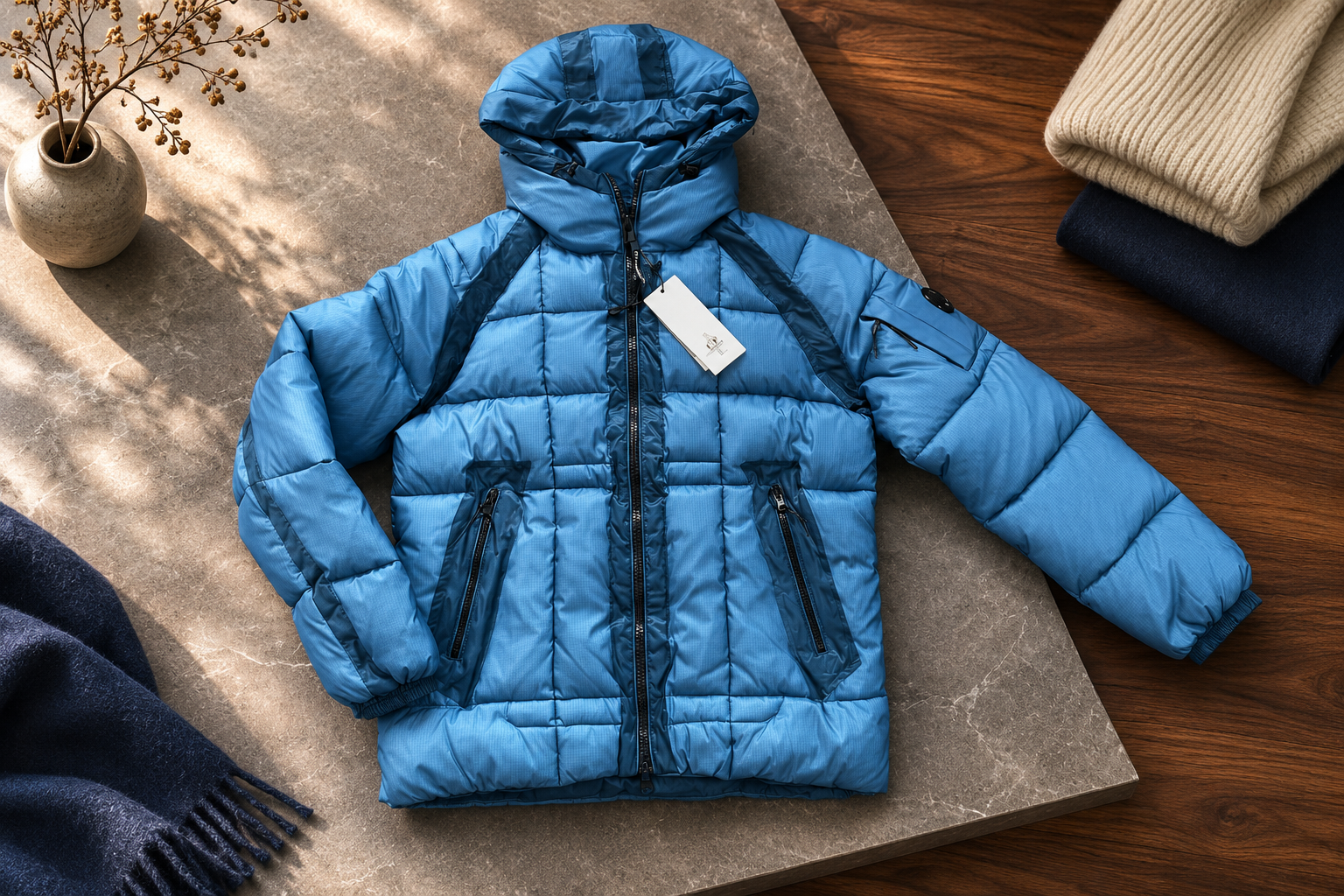
Visual Highlights
This flat lay centers on a blue hooded quilted jacket, fully spread across a gray stone-patterned tabletop. The image clearly shows the hood, stand collar, central zipper, and two slanted zippered pockets. A small circular patch appears on the sleeve. The horizontal and vertical quilting creates a rhythmic structure, while the puffy silhouette gives the jacket a distinctly layered winter look.

Color Notes
The main color is a fairly bright blue, creating a focused and clear visual point. Darker blue appears around the hood opening, zipper edges, pocket areas, and some panel seams, creating tonal depth while making the central structure stand out more clearly.
When choosing the background, prioritize low-saturation and dark elements:
- A gray stone-patterned tabletop works as a neutral base, complementing the blue jacket without competing for attention.
- A deep navy scarf or knit item can echo the jacket's darker panels and create a more grounded overall look.
- An ivory knit piece works well in a corner of the frame, using a light tone to balance the visual weight of the blue.
- A brown wood surface can add warmth and give the blue jacket a stronger fall and winter atmosphere.
For a cleaner display, keep only gray, navy, and ivory. For a warmer image, add a small amount of brown wood, but avoid introducing too many highly saturated color blocks.
Display Arrangement
This jacket works well in a fully spread flat lay. Place the hood at the top and open the sleeves naturally to both sides so the hood, shoulders, sleeves, and quilted body all remain visible. Keep the central zipper unobstructed to create a clear vertical visual line from the hood opening to the hem.
Accessories can be arranged asymmetrically in the corners: place a folded scarf or knit item on one side while leaving more tabletop space on the other. This conveys a winter styling atmosphere without covering the pockets, sleeve patch, or quilted panels. Small branches or ceramic vessels can serve as background accents, but they should be positioned away from the jacket to prevent overlap with the clothing details.
Styling Suggestions
The blue jacket is visually striking, so use dark bottoms to stabilize the overall proportions. Black, charcoal, or deep navy pants can continue the darker details in the image. For a lighter feel, choose an ivory or light gray knit layer to echo the lighter accents in the scene.
Shoes and accessories can follow the same low-contrast approach. Dark ankle boots, gray sneakers, or brown leather-textured shoes can all coordinate with the jacket. Choose a scarf in deep navy, gray, or ivory, and avoid overly complex patterns so the jacket's quilting remains the focus.
Control the visual emphasis in the following order:
- Establish the blue jacket as the main color and focal piece.
- Use dark bottoms or shoes to anchor the overall color balance.
- Add ivory or light gray accessories near the face or in the corners of the frame.
- Finally, add brown or wood tones to create a warm seasonal feel.
Details Worth Borrowing
The most useful detail to reference is the combination of tonal blues. The jacket body stays bright blue, while the zipper, pockets, and panel seams use deep blue. This preserves overall unity while making the functional structure easier to see. In the display, the gray tabletop, deep blue fabric, ivory knit, and brown wood create a balance between cool and warm tones.
Keep in mind that a flat lay can only be used to assess appearance, color, structure, and display relationships. It cannot determine the fit when worn, weight, warmth, fabric composition, actual sizing, or how the zipper feels in use. The circular patch and hangtag can only be described based on visible details in the image and cannot confirm brand authenticity or a specific model.
Nadia Brandt is the site's Editor-in-Chief, reviewing important corrections and leading its quarterly shipping-line timing study. Her coverage includes shopping-agent fee structures, parcel consolidation and volumetric weight, EU-bound shipping timelines, personal-import customs paperwork and QC photo interpretation. Each quarter, she sends paired 2 kg and 5 kg test parcels along every line the desk covers, logging pickup scans, warehouse departure, airline departure and delivery dates against the date the quote was issued. She reconciles the parcels with agent invoices, records cost differences, and uses median figures for the site's public timing tables. She maintains the order log in which scores are fixed before page performance is checked. Her coverage explains the transport milestones and invoice checks behind comparisons of shipping times.