Start with the Overall Color Palette This tee uses an all-black base, making it suitable for low-contrast, clean-line styling. The black body keeps a minimal feel, and the small curved logo on the chest doesn't disrupt the restrained tone; the white dot pattern and line details on the sleeves provide a clear visual focus. If you want to keep the sporty vibe, pair it with charcoal, dark gray, or black bottoms, letting the sleeve pattern be the main identifying feature. To add depth, opt for wh
Start with the Overall Color Palette
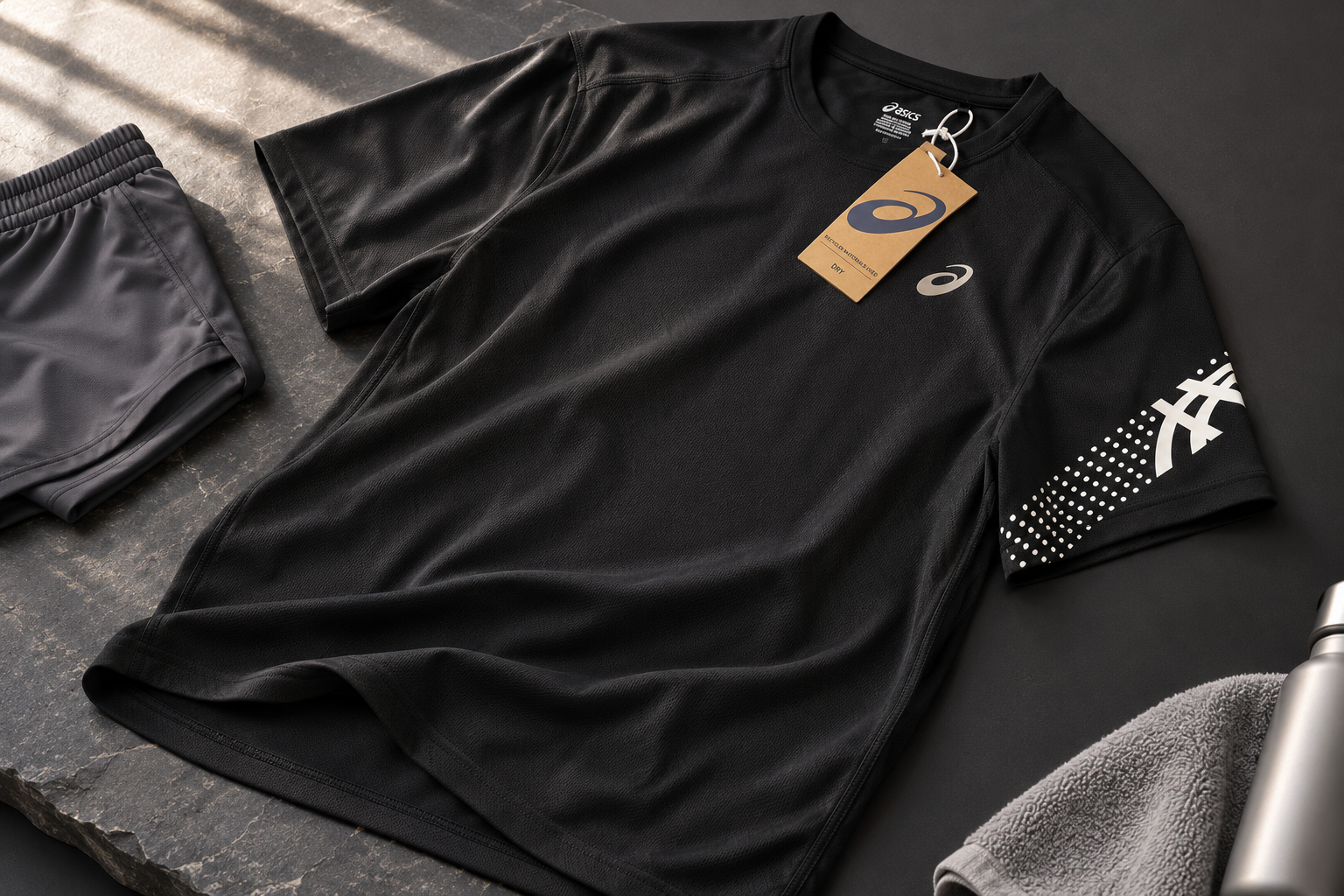
This tee uses an all-black base, making it suitable for low-contrast, clean-line styling. The black body keeps a minimal feel, and the small curved logo on the chest doesn't disrupt the restrained tone; the white dot pattern and line details on the sleeves provide a clear visual focus.
If you want to keep the sporty vibe, pair it with charcoal, dark gray, or black bottoms, letting the sleeve pattern be the main identifying feature. To add depth, opt for white or light gray socks or shoe accents to echo the white sleeve elements, but avoid adding too many bright colors at once.
Details and Display in the Image

The image uses a front flat lay, with the body of the shirt taking up the main area, sleeves spread out to the sides, and the hem with natural wrinkles. The crew neck, cuffs, and hem edges are relatively smooth, and the shoulder and body seam lines are clearly visible. The fabric surface shows a fine knit texture, and the black has slight light and dark variations under different lighting.
When displaying, you can keep this diagonal spread composition: let the body form the main visual plane, and place matching shorts or other dark items to the side, avoiding covering the chest logo and sleeve pattern. If using a dark background, suggest using side lighting or material differences to distinguish the garment outline; a rough tabletop, matte fabric, or light gray accessories can help the black body retain depth.
The hangtag is still attached at the neckline, suitable for keeping when showing details so readers can notice the complete state of the neckline area. Avoid adding too many props in the composition, as it will weaken the recognition of the sleeve decoration and body lines.
Three Styling Ideas
- All-Black Match
Choose black or near-black shorts or pants to create a continuous dark silhouette. Shoes can be black and white, not changing the overall tone while echoing the white sleeve pattern.
- Black-Gray Layering
Use charcoal or medium-dark gray bottoms to create contrast and make the black top stand out. Accessories can stay black to reduce color count and focus attention on the upper body.
- Small Black-and-White Accents
Keep the black top and dark bottoms as the main, and add a small amount of white only on shoelaces, sock cuffs, or hats. The white area should be restrained to echo the sleeve dots and lines without stealing the main visual.
Key Points for Selection and Placement
- To highlight the pattern, prioritize bottoms without large prints.
- To emphasize the fit lines, when laying flat, spread the shoulder lines, cuffs, and hem as much as possible.
- For a calm display effect, use no more than three colors: black, charcoal, and light gray.
- To enhance light and shadow layers, adjust the background texture and lighting direction instead of piling on more decorations.
- The image currently mainly shows the front appearance, visible seams, pattern, and edge condition; back details, fabric composition, wearing comfort, size fit, and post-wash performance cannot be judged from this image alone.
Nadia Brandt is the site's Editor-in-Chief, reviewing important corrections and leading its quarterly shipping-line timing study. Her coverage includes shopping-agent fee structures, parcel consolidation and volumetric weight, EU-bound shipping timelines, personal-import customs paperwork and QC photo interpretation. Each quarter, she sends paired 2 kg and 5 kg test parcels along every line the desk covers, logging pickup scans, warehouse departure, airline departure and delivery dates against the date the quote was issued. She reconciles the parcels with agent invoices, records cost differences, and uses median figures for the site's public timing tables. She maintains the order log in which scores are fixed before page performance is checked. Her coverage explains the transport milestones and invoice checks behind comparisons of shipping times.