This product page shows a Represent-style cotton pullover hoodie, with the main fabric labeled as 100% cotton, weight range 351–400g, regular thickness, sizes S–XL, and described as a relaxed fit. The page also has a contradiction that needs priority checking: the attribute info says no hood, but the description text mentions a hood and back print. This QC check is not about determining authenticity or guaranteeing q
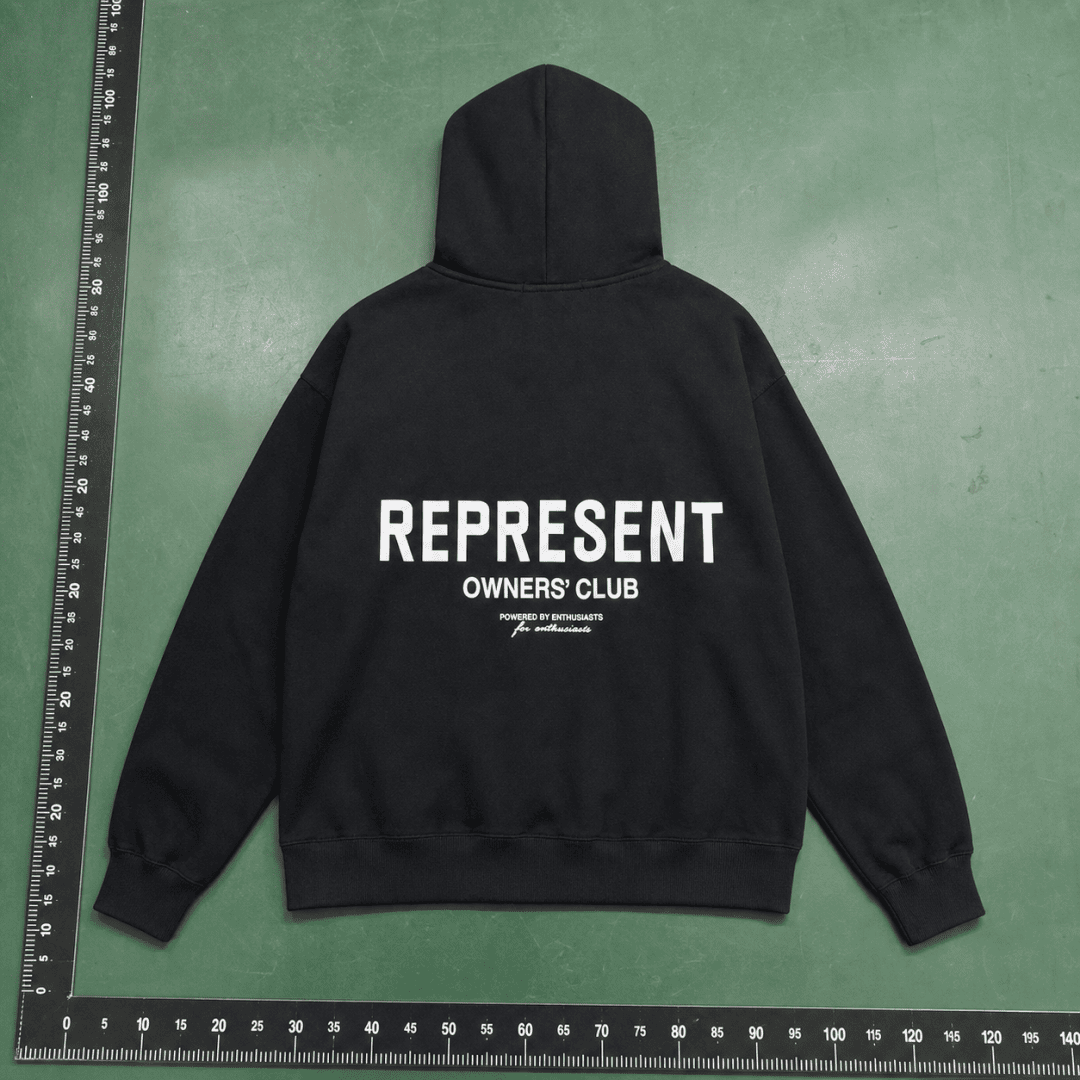
This product page shows a Represent-style cotton pullover hoodie, with the main fabric labeled as 100% cotton, weight range 351–400g, regular thickness, sizes S–XL, and described as a relaxed fit. The page also has a contradiction that needs priority checking: the attribute info says no hood, but the description text mentions a hood and back print.
This QC check is not about determining authenticity or guaranteeing quality from a single photo; it's about helping you make a specific decision before ordering: whether the QC photos support continuing with the purchase. If evidence is insufficient, you should request additional photos, contact the seller for confirmation, or pause the order. What you can see directly in the photos counts as visible evidence; things like durability, hand feel, and actual fit cannot be concluded from QC photos alone. 🧭
Clarifying the purchase decision for represent hoodie QC checks
You need to choose one of three outcomes:
- Continue purchase: Color, size label, print placement, and main stitching areas have no obvious conflicts, and the fit risk is acceptable.
- Request additional photos or confirmation: Key areas are obscured, photo angles are insufficient, or the page information and photos cannot corroborate each other.
- Pause purchase: There are obvious damages, severe color deviation, large-scale print peeling, size errors, or the hood attribute does not match the intended version.
This item is especially not suitable for directly applying the sizing and fabric conclusions of genuine Represent Owners Club series. The page's listed weight range of 351–400g is lower than the 480gsm loopback cotton commonly seen in that genuine series, so you cannot transfer the heavy feel, shrinkage performance, or durability reviews from the genuine series to this item.
Confirming the same product from the fashion-reps product details page
When checking, you should first open this product's details page, not judge from the homepage, brand page, category page, or other product images. The page title corresponds to a Represent-style cotton pullover hoodie, with multiple color options including black, white, green, blue, gray, coffee, and heather gray, etc. The specific available colors should still be based on the variant you actually selected and the order page.
The product page shows a reference price of $20.90, but the final product price, service fee, and international shipping should be based on the settlement page of the selected shopping agent platform. Price alone cannot prove workmanship, material, or authenticity, nor replace QC inspection. 💰
The page also clearly states that no independent buyer reviews or dedicated QC discussions were found for this product. Therefore, the role of QC photos is mainly to verify the visible condition of the current order or current product sample, not to prove that all items of the same style have the same quality.
Entering the corresponding QC photo gallery via View QC Photos
On the product details page, use the "View QC Photos" entry to enter the corresponding QC photo gallery. Do not guess the URL based on the product name, and do not treat other pages, search results, or similar style images as QC evidence for this product.

When viewing photos, first confirm the following identity information matches:
- Does the product name or style correspond to the current product details page?
- Is the color consistent with the variant you intend to purchase?
- Is the garment in the photo a pullover hoodie, not a jacket, crewneck, or other similar style?
- Do the photos show enough angles to cover the front, back, collar, cuffs, and hem?
- If the photos only show partial areas, you cannot assume the unshown areas have no problems.
QC photos are a record of a particular item or a visible sample. They can help you spot anomalies already present in the photos, but cannot guarantee that the item you receive will be identical in every detail to the photos.
Checking visible evidence of color, size label, and fit
Look at color first, then size. Color checking should not rely solely on the product thumbnail, because different lighting, white balance, and backgrounds can alter the appearance of black, gray, heather gray, and coffee. You need to compare the color names in the order variant, product details page, and QC photos for consistency.
For sizing, the page only shows S, M, L, XL, and does not provide sufficient independent size measurements for this product. Don't assume that because the label says a certain size, it conforms to common brand sizing. A safer approach is to ask the seller for flat measurements of chest width, body length, and sleeve length, and compare them with your own clothing or body measurements.
| Check item | What photos can help confirm | What photos cannot confirm alone |
|---|---|---|
| Color | Whether the tone in the current photo obviously deviates from the selected variant | The actual range of color difference under different screens and lighting |
| Size label | Whether the label text and size letters are clear and match the order | Whether chest width, body length, and sleeve length meet your needs |
| Fit appearance | Visible performance of shoulder line, body width, and hem state | Drape, comfort, and actual range of motion when worn |
| Thickness | Whether there is an obvious visual difference in thickness | Actual gram weight, warmth, shrinkage rate, and durability |
If you want a relaxed fit, focus on whether the shoulders are obviously dropped, whether the body is symmetrical, and whether the hem is clamped or folded so that it cannot be judged. Relaxed doesn't mean infinitely oversized; the label size and actual flat measurements still need to be checked separately.
Checking print placement, stitching, drawstrings, and seam details
Print inspection should be done from three aspects: position, integrity, and edge condition. First confirm whether the text or pattern described on the page appears on the front or back, then see if the print obviously deviates from the center of the body, or has large-scale breakage, raised edges, missing letters, or partial peeling. Minor light reflection cannot be directly equated with fading or cracking.
When checking stitching, prioritize shoulder seams, armholes, side seams, cuffs, and hem. Visible stitching issues include obvious skipped stitches, local missed seams, excessive loose threads, asymmetrical stitching on both sides, or severe puckering of the fabric. A single short thread is not necessarily unacceptable for the whole item, but if the same area repeatedly shows issues, you should save the original photo and request close-up shots.
Be especially careful with the hood and drawstrings. The product attributes say no hood, while the description mentions a hood. If the QC photos do not clearly show the neckline, hood attachment, and drawstrings, you cannot judge from a distant view which version it belongs to. You should confirm the specific variant with the seller and request close-up photos of the neckline and drawstrings. 🧵
Also observe the following in seam details:
- Is the neckline symmetrical and free from obvious deformation?
- Are the shoulder and sleeve seams continuous, with no visible thread breaks?
- Are the cuffs and hem ribbing obviously loose or locally twisted?
- Is there fabric stretching, wrinkling, or creasing near the print?
- Are there obvious position conflicts between labels, prints, and seams?
These observations can only describe what is visible in the photos, and cannot predict performance after washing, or prove fabric touch or long-term durability.
Distinguishing visible problems from quality conclusions that cannot be determined
QC photos can support limited visual judgments. For example, you can record: "The back print is visible in the current photo," "There is a long loose thread near the cuff area," "The size label shows L," or "The neckline is not clearly shown." These statements point to specific evidence, making communication easier later.
Do not write "quality is great," "fabric is thick," "definitely durable," "print won't peel," or "exactly like genuine." The current product page lacks sufficient independent buyer feedback and size measurement data, so these conclusions are not supported by sufficient evidence.
If the photos show color, size, or hood attribute inconsistent with your order selection, you should pause shipment or submit an after-sales request. If it's just insufficient photo angles, lighting, or resolution, you should choose to request additional photos rather than immediately treating the uncertainty as a defect. 🔍
When to pause purchase and organize requests for extra photos or returns
It is recommended to pause the purchase in the following situations:
- The color you ordered is clearly inconsistent with the QC photos.
- The label size does not match the size you ordered.
- The print has obvious missing letters, severe misalignment, large-scale cracking, or peeling.
- Shoulder seams, sleeve seams, hem, or cuffs have obvious missed seams, holes, or continuous thread breaks.
- The page says there is a hood, but the photos and attribute info cannot confirm the actual version.
- Key areas are obscured, and the seller cannot provide additional photos.
- You need a heavy 480gsm-type fabric, but the product page only lists 351–400g.
When organizing requests, keep the product name, color, size, original QC photos, and problem locations. Do not just send "there's a problem"; specify the exact item to confirm, for example, "Please take extra photos of the neckline and drawstrings to confirm whether this variant has a hood," or "Please take extra photos of the back print edges to confirm if there is peeling."
Whether a return or cancellation is possible depends on the shopping agent platform, seller rules, order stage, and item condition. Do not equate submitting a request with approval, and do not assume fees will be refunded before confirmation.
Saving original QC photo evidence and completing a pre-order action checklist
Before ordering, you can complete records in the following order:
- Save the product name and variant info from the product details page.
- Save the original QC photos, not just compressed chat screenshots.
- Record the color, size, and visible abnormal locations in the photos.
- Confirm with the seller the hood attribute, back print, and flat measurements.
- Compare chest width, body length, and sleeve length; do not choose solely based on S–XL labels.
- Request additional photos for unclear areas; do not proceed with payment or shipment until photos are received.
- Decide whether to submit a return request based on platform time limits and after-sales rules.
The final judgment can be summarized as: if color and size evidence is consistent, the print and main stitching areas show no obvious visible anomalies, and you accept the lighter specifications compared to the genuine heavy series, you can consider continuing the purchase; if you want heavy fabric, need standard brand sizing, or cannot accept the unclear hood attribute, you should first confirm measurements and version, and pause the order if necessary.
The benefit of doing this is reducing subsequent communication costs caused by size errors, color mismatches, or obvious defects. The cost is that you may need to wait for additional photos or give up a seemingly cheap item; for buyers who cannot accept waiting, have high after-sales uncertainty, or must get a clearly hooded version, this cautious verification is usually more appropriate than shipping directly. ✅
Article images

Nadia Brandt is the site's Editor-in-Chief, reviewing important corrections and leading its quarterly shipping-line timing study. Her coverage includes shopping-agent fee structures, parcel consolidation and volumetric weight, EU-bound shipping timelines, personal-import customs paperwork and QC photo interpretation. Each quarter, she sends paired 2 kg and 5 kg test parcels along every line the desk covers, logging pickup scans, warehouse departure, airline departure and delivery dates against the date the quote was issued. She reconciles the parcels with agent invoices, records cost differences, and uses median figures for the site's public timing tables. She maintains the order log in which scores are fixed before page performance is checked. Her coverage explains the transport milestones and invoice checks behind comparisons of shipping times.