Conclusion First Whether this multicolor cotton knit top can work as a fall/winter mid-layer doesn't hinge on the word "loose" in the listing, but on whether there's enough room between it and your usual inner layer and outerwear. The page lists it as a cotton pullover top, 351–400g, medium weight, loose fit, sizes M–XXXL, with multiple color and pattern variants featuring letters, numbers, or text. This information suggests it may have more presence than a lightweight base layer, but it's no
Conclusion First
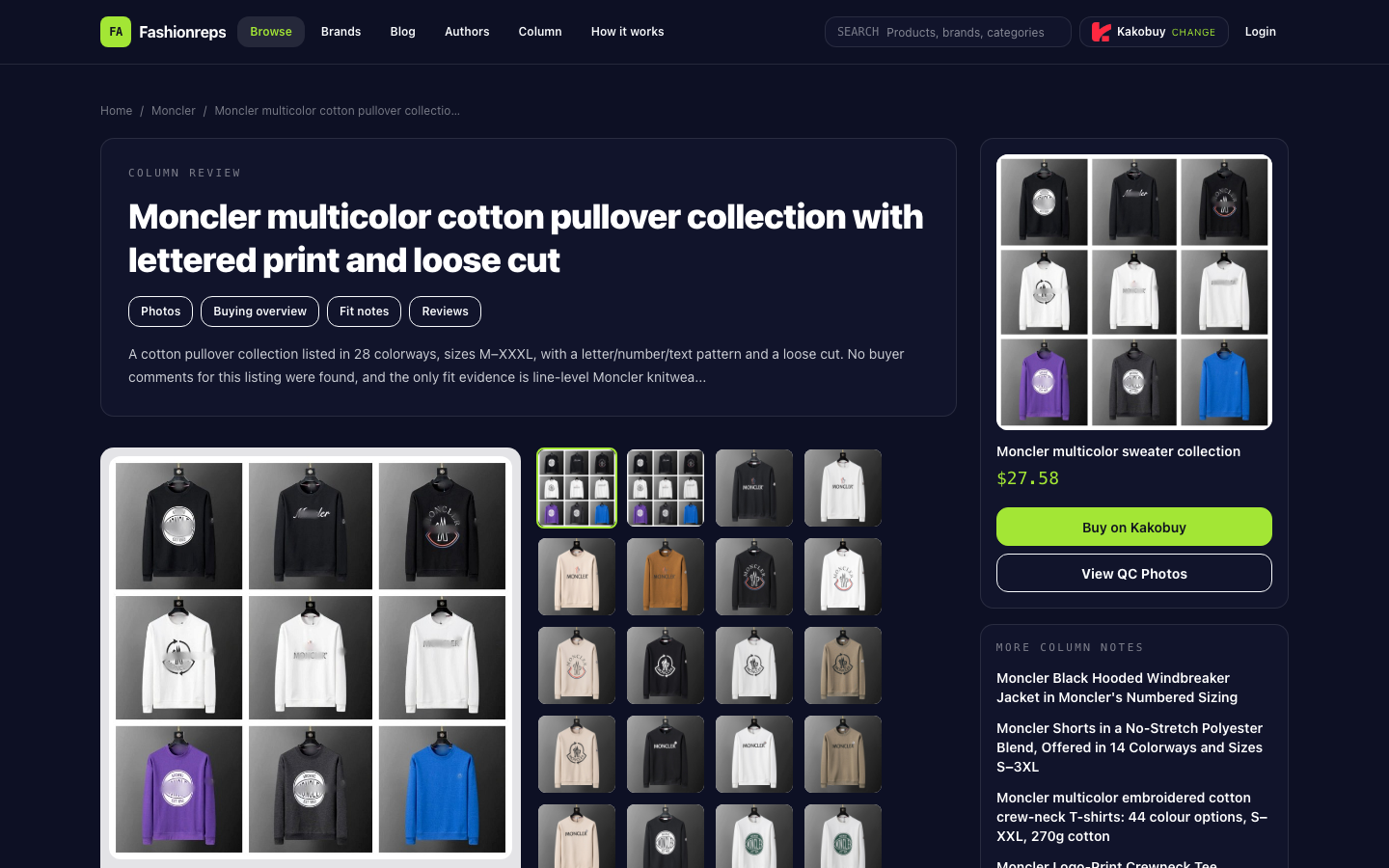
Whether this multicolor cotton knit top can work as a fall/winter mid-layer doesn't hinge on the word "loose" in the listing, but on whether there's enough room between it and your usual inner layer and outerwear. The page lists it as a cotton pullover top, 351–400g, medium weight, loose fit, sizes M–XXXL, with multiple color and pattern variants featuring letters, numbers, or text. This information suggests it may have more presence than a lightweight base layer, but it's not enough to directly determine if it will look bulky under a jacket or short coat.
A safer approach is to first measure a knit or sweatshirt you already own, then ask the agent to provide chest width, shoulder width, length, and sleeve length for the target color. If the measured dimensions are close to your existing comfortable mid-layer and your outerwear still has room, then it's worth considering further. If you need clear information on thickness, hood/collar structure, or buyer feedback for this item, the current page evidence is insufficient.

What the Page Currently Confirms
- Main fabric and fabric name are both listed as cotton.
- The page describes it as a loose fit, with sizes ranging from M to XXXL.
- Weight range is listed as 351–400g, categorized as medium weight.
- The page lists 28 color variants grouped by style numbers such as 99201–99207.
- Patterns include letters, numbers, or text elements.
- The page indicates a measurement tolerance of 1–2cm.
- The listed reference price is $27.58; final item price, service fees, and international shipping must be confirmed on the shopping agent's page.
These fields can help determine if it's the fall/winter everyday top you're looking for, but they cannot replace actual measurements for the target color. 351–400g is the weight range given on the page, not the overall volume of the garment when worn, and it alone cannot prove whether it will fit well with a particular outerwear piece.
Why "Loose" Doesn't Automatically Mean Good for Layering
A loose fit typically means the chest or body has relatively more room, but fall/winter layering also depends on shoulders, armholes, sleeve length, and body length. If the shoulders are too wide, sleeves bunch up inside the jacket sleeves, or the body creates excessive folds at the waist, it can look bulky even if the chest isn't tight.
Conversely, if your outerwear has a roomy cut and the sleeves have extra space, a medium weight of 351–400g may not be a significant burden. Therefore, the focus should shift from "Is this item thick?" to "Is the size difference between this item and my existing layering combination reasonable?"
First Establish a Size Reference with Existing Clothing
Pick a fall/winter mid-layer you already wear comfortably and that serves a similar purpose. Ideally, it should be a knit or sweatshirt you also plan to pair with a jacket or coat, not a tight base layer. Lay the garment flat and record the following measurements:
- Chest width: straight-line distance from armpit to armpit.
- Shoulder width: distance between the left and right shoulder points.
- Body length: length from the highest point of the shoulder to the hem.
- Sleeve length: length from the shoulder point to the cuff.
- Loose fit of sleeves and underarms: after putting on the outerwear, check for pulling, bunching, or restricted movement.
Keep the same posture and measurement method each time, and don't forcefully flatten natural wrinkles before comparing with product data. The page already notes a 1–2cm tolerance, so when measurements are close to the limit, don't base your decision on a single number.
What Data to Request from the Agent
Before ordering, ask the agent to check or measure for your chosen color and style:
- Chest width, shoulder width, body length, and sleeve length;
- Actual collar structure and whether there's a hood;
- Whether the target color still has your size;
- Whether the measured data applies to your specific style number.
Address the collar field conflict first. One field on the page says "hooded," while another hood marker shows "no hood," and the current listing doesn't explain the discrepancy. You cannot assume it has a hood or not based on one field alone.
How to Determine if It Fits Inside Your Outerwear
Compare measurements of your existing mid-layer with the data provided by the agent. If the target top's chest width, shoulder width, and sleeve length are significantly larger than your usual mid-layer, further confirm whether your outerwear has enough allowance. If chest width is similar but shoulder or sleeve length is noticeably larger, the risk may be more about shoulder movement and cuff bunching than chest tightness.
Also consider the type of outerwear:
- Short jacket: focus on body length, hem bunching, and sleeve space.
- Fitted coat: focus on shoulder width, chest width, and underarm range of motion.
- Loose down or workwear jacket: usually easier to accommodate a medium-weight knit layer, but still check if sleeve length and hem overlap.
- Thin shell: if the outer layer has little extra room, a loose fit and medium weight may more easily cause wrinkles or restricted movement.
These are layering assessment methods, not actual fit conclusions for this item. The page has no buyer reviews for this product and no wearing records for different outerwear.
Why Size Hints Are Only Directional
The brand-level knit size hints cited on the page are inconsistent: one says knits tend to run slim, so size up for a looser fit; another says they are true to size but with a slightly European slim characteristic, or may run about one size small. These hints refer to brand-level knit tops, not actual measurements for this cotton listing.
Therefore, don't apply "size up" directly to this item. The page already states a loose fit; blindly increasing the size may make the chest wider but also cause shoulder drop, overly long sleeves, or increased body length. Compared to generic size advice, actual chest, shoulder, length, and sleeve measurements for the target color are more valuable for decision-making.
When to Proceed and When to Skip
Proceed with verification if: you can provide a comfortable fall/winter mid-layer as reference; your outerwear has clear layering room; the agent can return specific measurements for the target color and size; you accept that collar/hood details need further confirmation.
Better to skip for now if: you must rely on specific buyer feedback for this item; your outerwear is fitted with no extra space; you need definite hood structure; or the agent cannot provide measurements for the target style. The page has no buyer reviews and brand-level size hints conflict; under these conditions, judging by photos and general size impressions means risks will only surface after delivery.
Final Verdict
This top has a basis for further evaluation as a fall/winter mid-layer: cotton, 351–400g, medium weight, and loose fit all align with everyday layering scenarios. But the page evidence only supports "worth judging by actual measurements," not "definitely won't look bulky" or "buy a certain size directly."
Before ordering, prioritize two things: use an existing mid-layer to establish chest, shoulder, length, and sleeve references; have the agent confirm actual measurements and hood/collar structure for the target color. If the data matches your outerwear space, then consider color and pattern; if key dimensions or collar info remain unclear, skipping this item is safer than gambling on a loose label.
Nadia Brandt is the site's Editor-in-Chief, reviewing important corrections and leading its quarterly shipping-line timing study. Her coverage includes shopping-agent fee structures, parcel consolidation and volumetric weight, EU-bound shipping timelines, personal-import customs paperwork and QC photo interpretation. Each quarter, she sends paired 2 kg and 5 kg test parcels along every line the desk covers, logging pickup scans, warehouse departure, airline departure and delivery dates against the date the quote was issued. She reconciles the parcels with agent invoices, records cost differences, and uses median figures for the site's public timing tables. She maintains the order log in which scores are fixed before page performance is checked. Her coverage explains the transport milestones and invoice checks behind comparisons of shipping times.