This guide focuses on one specific item: the "Gucci White Sunglasses in a Modern Everyday Frame" on Fashionreps. The goal isn't to authenticate from a few photos, but to help you complete a recordable, follow-up-able QC review before purchase: confirm frame appearance, lens condition, temple markings, assembly, and photo blind spots, then decide whether to request more photos, hold the order, or pause the purchase. 😎 The product page shows a reference price of $23.5
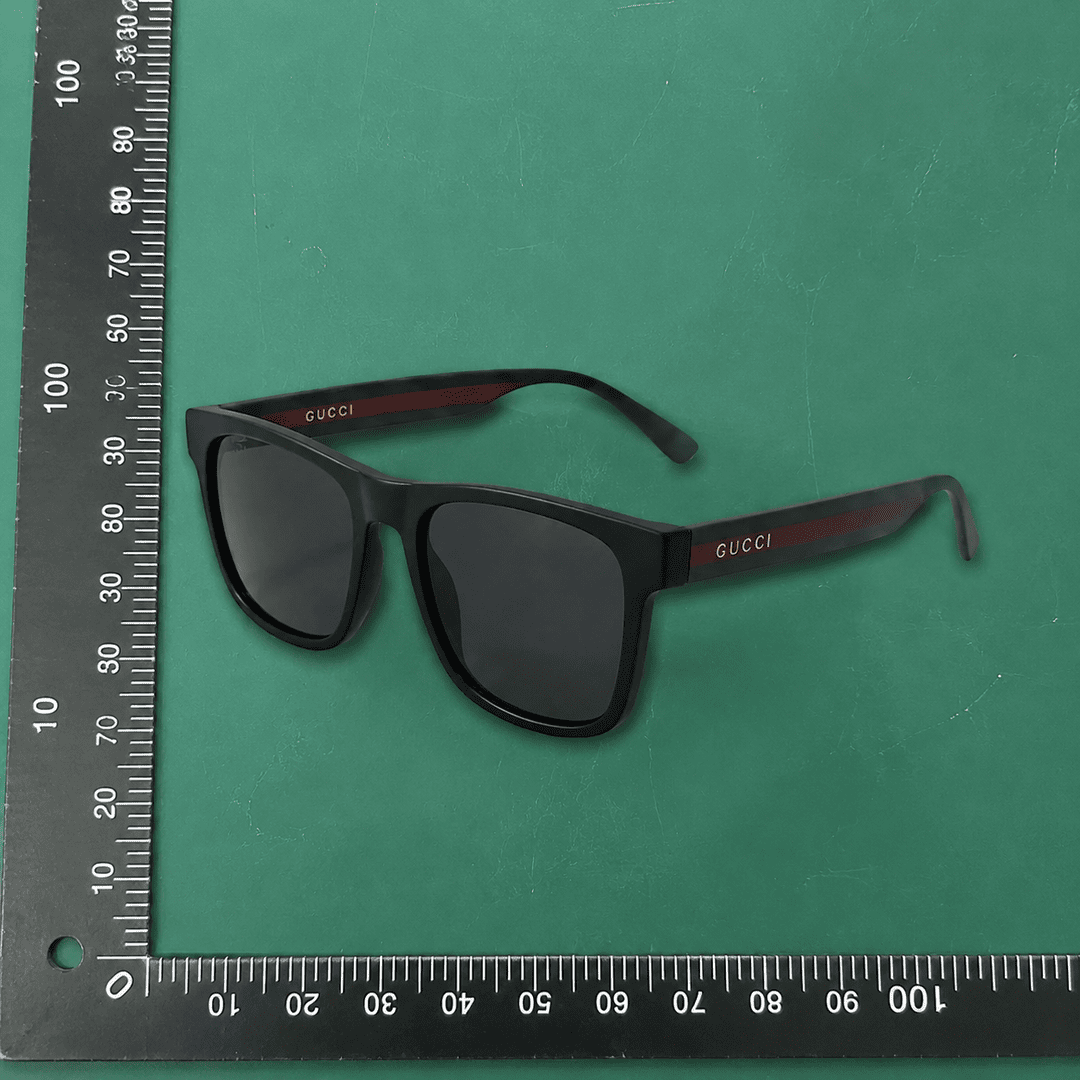
This guide focuses on one specific item: the "Gucci White Sunglasses in a Modern Everyday Frame" on Fashionreps. The goal isn't to authenticate from a few photos, but to help you complete a recordable, follow-up-able QC review before purchase: confirm frame appearance, lens condition, temple markings, assembly, and photo blind spots, then decide whether to request more photos, hold the order, or pause the purchase. 😎
The product page shows a reference price of $23.51, but the final item price, service fees, and international shipping need to be confirmed on your chosen shopping agent platform. The page doesn't provide full frame, lens, or temple dimensions, nor does it list polarization specs, so you can't infer these from QC photos.

The Purchase Decision This Gucci Sunglasses QC Should Resolve
The core question you need to answer is: Does the visible condition of these white Gucci sunglasses support your current purchase decision?
After review, you should be able to:
- Verify color, overall silhouette, and style against the product detail page.
- Check frame edges, lens surfaces, temple connections, and branding for obvious abnormalities.
- Distinguish between flaws already visible in photos and aspects that can't be determined due to angles, reflections, or missing images.
- Request specific angles or close-ups from the seller when needed.
- Pause the purchase if key facts remain unconfirmed, rather than treating uncertainty as a QC pass.
This method is not for authentication and cannot replace professional optical testing, material analysis, or official brand verification. Photos only show visible appearance at the time of shooting; they cannot guarantee wearing comfort, lens protection, polarization, or after-sales outcomes.
From Product Detail Page to View QC Photos
First, open the product detail page and check the product name, white frame description, reference price, and style info. Only after confirming this page corresponds to these Gucci sunglasses should you proceed to the "View QC Photos" link on the page to view QC images.
Don't guess the QC URL, and don't treat product main images, brand pages, category pages, or other Gucci sunglasses photos as evidence for this item. The current page provides the QC entry for this product; when inspecting, keep the correspondence between page and photos.
After entering the gallery, start with overall shots, then front, side, temple, lens close-ups, and connection areas. If there aren't enough photos, record "not provided" instead of using adjacent product images to fill gaps. 🔍
How to Check Frame Color, Shape, and Structure Item by Item
First, see if the color remains consistent across angles. White frames are easily affected by lighting, background, and exposure, so the point isn't to demand identical color in every photo, but to check for obvious localized yellowing, patches, dirt, or left-right color differences on the frame body. If photos are under a single light source, color judgment should be marked as limited evidence.
Next, examine the front silhouette. Align left and right sides on the same horizontal line, check if the frame is obviously skewed, if left and right openings are similar, and if the nose bridge connection has unnatural height differences. Slight shooting angle variations can't be directly judged as deformation; only if the same deviation appears across multiple angles should you follow up with the seller.
Frames are rigid structures and typically don't have stitching like clothing. Replace "stitching check" with edge and seam inspection: look for obvious burrs, glue overflow, discontinuous molding lines, or uneven chamfers on frame edges. If image resolution is insufficient, write "edge details not fully shown" rather than claiming flawless workmanship.
When checking temple opening, observe whether left and right hinges are at similar angles and whether temple-frame connections are misaligned. A single static image can't prove opening resistance, tightness, or long-term durability, so "looks aligned" doesn't equal "hinge functions normally."
How to Record Visible Evidence for Lenses, Temples, and Branding
Lens inspection should be split into surface condition and spec confirmation.
Surface condition can include:
- Visible scratches, white spots, bubbles, indentations, or obvious stains.
- Abnormal differences in reflection between left and right lenses.
- Obvious lifting or uneven gaps between lens edges and frame grooves.
- Strong reflections obscuring the lens center, making it impossible to assess.
But QC photos cannot prove polarization, UV protection, light transmission, or lens material. The current product page also doesn't explicitly list polarization specs, so don't label these as polarized sunglasses based on lens color or reflections. Existing public discussions only involve other buyers' own Gucci sunglasses and cannot directly represent this item's lens performance.
For temples, check left and right lengths, bend directions, and tip condition. Focus on whether clear brand text, patterns, or Web stripe details are visible; if branding appears only in distant shots or is obscured by shadows/reflections, mark as "not fully verified." Branding location and appearance can be a clue for review, but not a standalone authenticity conclusion.
Hardware checks mainly target hinges, screws, and connectors. Look for obvious rust, discoloration, misalignment, missing parts, or structural differences between left and right. Photos cannot prove screws are tight or confirm metal material. 🕶️
How to Distinguish Scratches, Assembly Deviations, and Photo Blind Spots
Don't conclude on a single concern until you've taken three steps: first, confirm it's on the product itself, not background or reflection; second, compare if it repeats in other angles; third, judge whether it affects use or appearance.
You can use this recording format:
| Observation Item | Visible Evidence You Can Record | Conclusions You Cannot Directly Draw |
|---|---|---|
| Frame surface | Continuous scratches, stains, or color unevenness in a specific area | Material grade, durability, or authenticity |
| Lens surface | Obvious linear scratches, white spots, or obstructions | Polarization, UV protection, or optical performance |
| Hinges and temples | Obvious misalignment in left-right connections or missing parts | Opening resistance, screw tightness, or long-term life |
| Branding and patterns | Whether text, patterns, or Web stripe are clearly visible | Authenticity, authorized source, or brand guarantee |
| Frame silhouette | Obvious front skew or left-right asymmetry | Wearing comfort and actual face fit |
If a "scratch" appears only in one photo with strong reflections, don't immediately conclude damage. Request a front close-up with strong light off and lenses slightly rotated. Conversely, if the same line appears fixed across multiple angles on lens or frame, list it as a defect needing seller confirmation.
Photo blind spots also need separate recording. For example, without side lens shots, you can't confirm edge chipping; without fully extended temple shots, you can't check if both sides are parallel; without hinge close-ups, you can't judge screws and connections. Blind spots mean "insufficient evidence," not "no problem."
Visible Evidence and Editorial Judgment Must Be Kept Separate
Visible evidence should use objective descriptions, e.g., "front photos show white frame and dark lenses," "temple branding area not clear at this angle," "product page does not list frame dimensions." Editorial judgment should be clearly marked as inference, e.g., "this may increase uncertainty in sizing," "if you value polarization, get spec confirmation first."
The product page provides enough information for initial checks of white frame, everyday styling, and basic appearance, but does not support these guarantees:
- Cannot guarantee authenticity.
- Cannot guarantee polarized or UV-protective lenses.
- Cannot guarantee frame size fits your face.
- Cannot guarantee hinge tightness, lens optical quality, or long-term durability.
- Cannot guarantee the seller will accept all returns/exchanges for defects or sizing reasons.
Therefore, a safer editorial judgment is: if you're mainly buying the look of a white frame and are willing to confirm lens specs, dimensions, and branding details before payment, you can continue gathering evidence; if you must have polarized lenses, specific dimensions, or independent item-level feedback, current information is insufficient to order directly. ✅
How to Request Additional Photos or Pause When QC Pics Are Insufficient
Make photo requests specific, don't just say "please take clearer photos." You can ask the seller to provide:
- A flat front view of the frame, avoiding obvious tilt.
- Left and right side shots with temples fully extended.
- Close-ups of left and right lens surfaces without strong reflections.
- Close-ups of inner temple text, patterns, and Web stripe.
- Close-ups of both hinges, screws, and lens edges.
- Photos with a measuring tape or caliper showing frame width, lens width, bridge width, and temple length.
After requesting, keep questions limited to this item; don't ask the seller to answer with other stock or internet images. Once you receive the new photos, fill in "confirmed," "still unclear," or "issue found" for each item.
If the seller can't provide key photos, or new photos show obvious scratches, lens edge damage, severe skew, missing branding, or hinge abnormalities, pause the purchase and check the applicable return/exchange window, conditions, and possible costs. Don't assume the shopping agent will accept disputes over subjective aesthetics, sizing mismatches, or defects not documented in advance. 📦
Pre-Purchase QC, Sizing, and Link Review Checklist
Complete this checklist before making a purchase decision:
- Product name matches the same pair of Gucci white sunglasses in QC photos.
- You accessed View QC Photos from the product detail page, not a guessed URL.
- Frame color, front silhouette, and left-right structure have been checked.
- Frame edges, molding lines, glue overflow, and connections haven't been overlooked.
- Lens surfaces have been inspected, but you haven't misstated appearance as polarization or UV specs.
- Temple text, patterns, and Web stripe have been confirmed or explicitly recorded as insufficient evidence.
- You have corresponding photos for hinges, screws, lens edges, and temple extension.
- Frame dimensions and temple length are confirmed, or you accept the risk of unknown sizing.
- You've recorded the current price is only a reference; service fees and international shipping still need confirmation on the agent page.
- You've reviewed return/exchange conditions and know which issues should be raised promptly at the warehouse stage.
The final decision should be based on a risk trade-off: requesting more photos adds waiting and communication costs but reduces losses from sizing, lens specs, or obvious appearance flaws; ordering directly may be faster but carries risks of insufficient evidence, limited returns, and more complex handling after international shipping. Those suited to continue verifying are people who value this white frame style and can accept the additional confirmation process; those not recommended to proceed are those who must confirm polarization, sizing, authenticity, or complete item-level feedback in advance.
Nadia Brandt is the site's Editor-in-Chief, reviewing important corrections and leading its quarterly shipping-line timing study. Her coverage includes shopping-agent fee structures, parcel consolidation and volumetric weight, EU-bound shipping timelines, personal-import customs paperwork and QC photo interpretation. Each quarter, she sends paired 2 kg and 5 kg test parcels along every line the desk covers, logging pickup scans, warehouse departure, airline departure and delivery dates against the date the quote was issued. She reconciles the parcels with agent invoices, records cost differences, and uses median figures for the site's public timing tables. She maintains the order log in which scores are fixed before page performance is checked. Her coverage explains the transport milestones and invoice checks behind comparisons of shipping times.