Start with the Overall Color Palette This flat lay is built primarily on black, white, and gray, with brown accents on the soles and subtle gray-green details. The black hoodie, black low-top sneakers, and dark pants create a stable visual base, while the white short-sleeve tee, long-sleeve top, and white low-top sneakers provide brightness. This palette doesn't rely on complex colors to achieve the layered look often seen in streetwear. 
Start with the Overall Color Palette
This flat lay is built primarily on black, white, and gray, with brown accents on the soles and subtle gray-green details. The black hoodie, black low-top sneakers, and dark pants create a stable visual base, while the white short-sleeve tee, long-sleeve top, and white low-top sneakers provide brightness. This palette doesn't rely on complex colors to achieve the layered look often seen in streetwear.
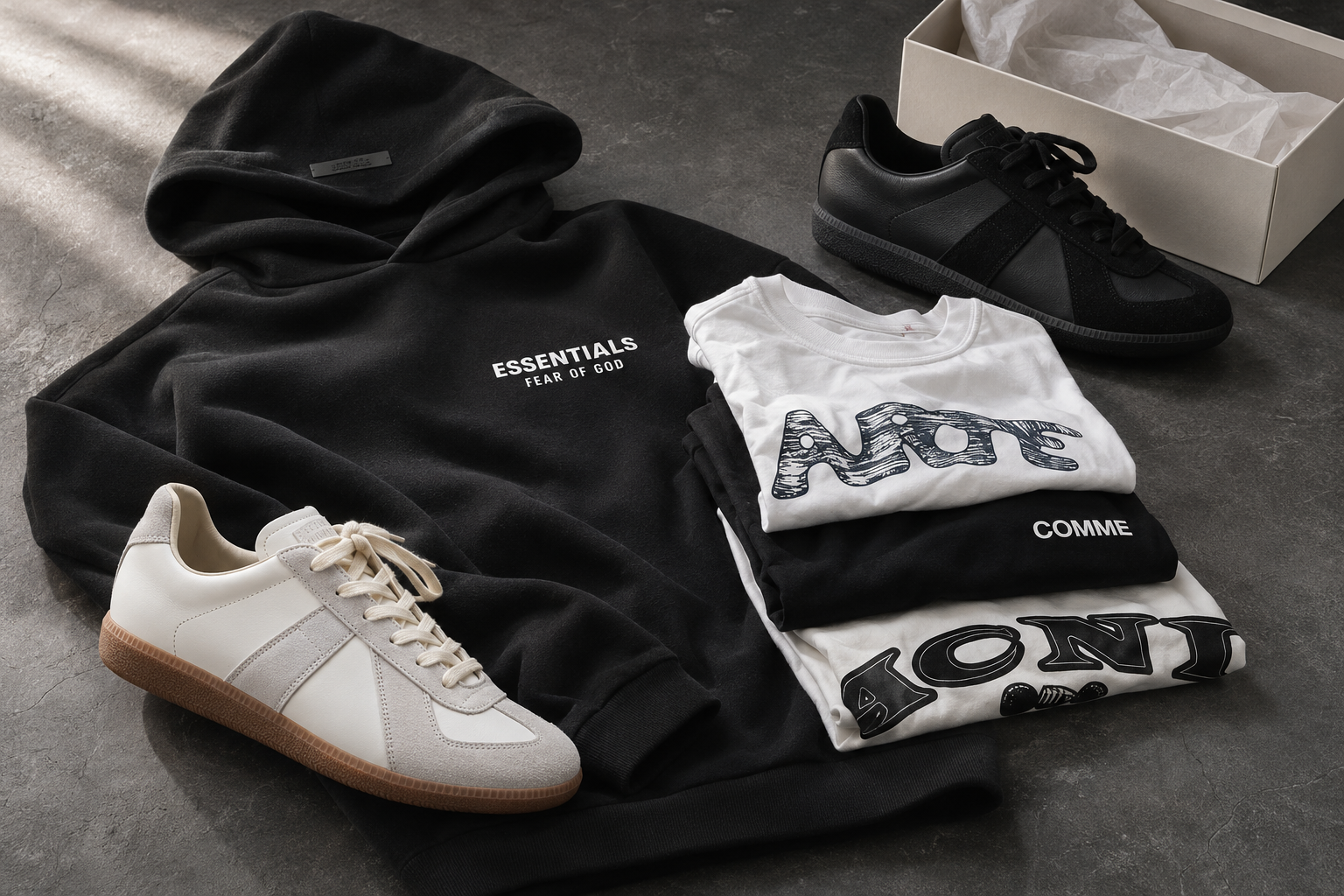
If you want a cleaner outfit, use black as the main color and white as a local accent. For example, pair a black hoodie with white sneakers; the shoe's paneling, beige laces, and brown textured outsole become the focal point of the lower half. Conversely, when white tops dominate, black joggers and black low-top sneakers can ground the brightness and keep patterns from feeling too scattered.
Three Styling Directions to Try
The first is a black-led street layering. A black hoodie can serve as the outer layer or main top, paired with black joggers, and finished with white sneakers for contrast. The white text on the hoodie chest and the light-colored text on the pants can echo each other, but avoid adding too many bold accessories.
The second is white tops with dark bottoms. The white short-sleeve tee in the image features black 3D lettering and a graphic, while another white tee uses dark blue text; when pairing with black joggers, choose your sneakers based on the pattern's intensity. A bold graphic tee works well with black low-top sneakers for a more focused look; a simpler tee can be paired with white sneakers for a lighter visual effect.
The third is adding warm-toned soles to a black-and-white base. The brown textured outsole and beige laces on the white sneakers introduce a touch of warmth to the cool black-and-white combination. If the clothing remains black and white, the sole becomes an independent color accent; when arranging the flat lay, point the toe toward the center of the frame to make the sole and lace details more visible.
How to Handle Graphics and Logos
The tops in the image include black lettering on a white body, large dark blue text, and white text on the black hoodie chest. When styling, keep only one main graphic as the focal point; choose solid or low-contrast designs for the other pieces.
For example, a white tee with large text can be paired with black pants and simple black low-top sneakers; a white long-sleeve with a smaller chest graphic can be paired with white sneakers to create more negative space. The black hoodie already has a clear chest graphic, so other pieces shouldn't compete with equally bold text.
Adjusting the Flat Lay Arrangement
The current setup is a dense unboxing-style layout, with the hoodie, stacked tops, sneakers, and shoe box all in frame. It works for showing the full color palette, but some items overlap, making it hard to see the complete silhouette of each piece.
To recreate this flat lay, arrange items in this order:
- Start with the largest dark hoodie or jacket as the base layer, serving as the visual foundation.
- Fold the white tops to one side, controlling the stack height to show off the main graphics and collar details.
- Place the two pairs of sneakers at diagonal corners, one black and one white to balance the composition.
- Put the shoe box behind or in a corner as a background element, making sure it doesn't cover the shoe uppers or main clothing logos.
- Keep drawstrings, laces, cuffs, and jogger hems visible; these details add depth to the image.
Also, leave some breathing room. If all the clothes, shoes, and box are clustered in the center, the patterns will compete for attention; offset the sneakers toward the edges and use the white pieces to carry the highlights—this usually creates a clearer visual flow.
What to Check Before Buying
This flat lay helps you assess color relationships, graphic placement, and styling direction. To further determine if the pieces fit your personal style, you should also look at fully laid-out images showing shoulder lines, lengths, sleeve lengths, pant proportions, and hem openings; for sneakers, check the toe, heel, sole, and interior. Based on this flat lay alone, don't make assumptions about fabric composition, actual thickness, sizing fit, comfort, or durability.
Nadia Brandt is the site's Editor-in-Chief, reviewing important corrections and leading its quarterly shipping-line timing study. Her coverage includes shopping-agent fee structures, parcel consolidation and volumetric weight, EU-bound shipping timelines, personal-import customs paperwork and QC photo interpretation. Each quarter, she sends paired 2 kg and 5 kg test parcels along every line the desk covers, logging pickup scans, warehouse departure, airline departure and delivery dates against the date the quote was issued. She reconciles the parcels with agent invoices, records cost differences, and uses median figures for the site's public timing tables. She maintains the order log in which scores are fixed before page performance is checked. Her coverage explains the transport milestones and invoice checks behind comparisons of shipping times.