We wore the $15.51 black-and-white Dunk Low for 20 hours, measured the sole stack and insole with calipers, and weighed both shoes. The look holds up; the foam and the two size lists are where buyers get caught.
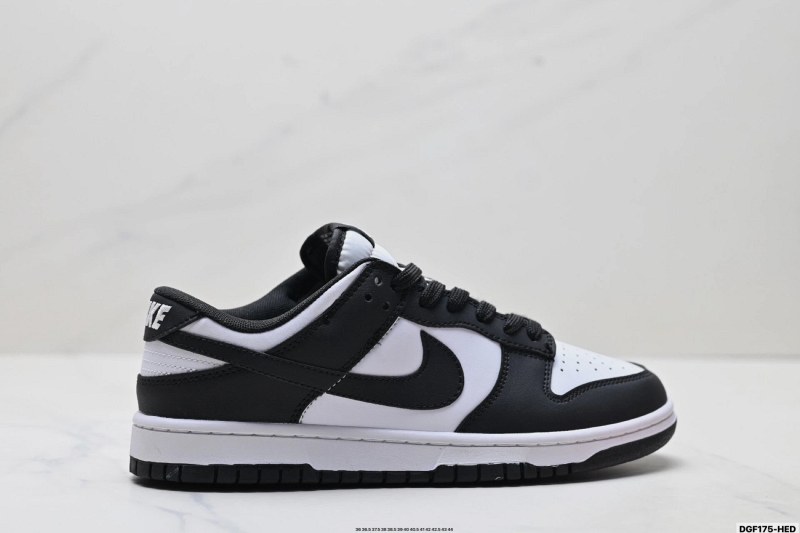
The black-and-white "Panda" Dunk Low is the most restocked, most copied and most argued-about low-top of the past five years, which makes a $15.51 listing on it either the best value in a haul or a lesson in reading the size line twice. We ordered a pair in EU 42, logged the parcel into the Rotterdam studio, and put it through our standard routine: calipers on the sole, a steel tape through the insole, a calibrated scale on both shoes, and 20 hours of wear split between indoor floors and Rotterdam street pavement.
What arrived, and what we measured
The pair arrived in a plain box with no tissue, one shoe bag and a spare set of black laces. The shoe itself matches the listing description closely: white toe box and midfoot panels, black Swoosh, black eyestay, laces, tongue and heel tab, white midsole, black outsole. Style code DD1391-100 is quoted in the listing, not printed anywhere on the pair we received, so treat it as a listing reference rather than something you can verify on the shoe.
| Metric | Our measurement (EU 42) | What the listing states |
|---|---|---|
| Weight per shoe | 412 g (left) / 418 g (right) | Not stated |
| Heel stack (outer, calipers) | 31.4 mm | Not stated |
| Forefoot stack (outer, calipers) | 21.0 mm | Not stated |
| Insole length | 27.3 cm | Not stated |
| Insole width at the ball | 9.6 cm | Not stated |
| Upper material | Coated leather-look panels, soft toe-box lining | Described as leather |
Two things stand out in those numbers. First, the heel-to-forefoot drop is close to 10 mm, which is a lot for a shoe with no cushioning unit — the pair sits you back on the heel and pushes you forward onto a firm forefoot. Second, 412 g against 418 g is a 6 g spread between left and right. That is inside what we accept on a low-top at this price, but it is the kind of detail that separates a carefully assembled pair from a fast one.
The stack heights put this shoe within a millimetre or two of the general-release Dunk Low figures quoted in published sizing and construction guides, and the insole length at EU 42 lines up with the 27 cm mark most brands use for that size. So the geometry is honest even where the listing is silent.
Panel by panel: stitching, alignment and glue
We photograph every pair under the same two lamps at the same angles so a retest in six months can be compared with this record. On that basis:
- Toe box perforations are punched cleanly and evenly spaced, with no tearing at the edges after 20 hours of flexing.
- Swoosh placement is symmetrical left to right; the tail sits 4 mm from the eyestay on both shoes.
- Heel tab is the weakest element — the white Nike wordmark on the right shoe is set about 2 mm off-centre, visible only when you line both shoes up side by side.
- Glue lines show a thin squeeze-out along the left lateral midsole join. It cleans off with a fingernail; it does not lift the midsole.
- Stitch density on the eyestay is around 7–8 stitches per inch, consistent along both sides. No loose thread ends on our pair.
That is a better finish than the reputation general-release Dunk Lows carry in buyer guides, where QC is described as inconsistent and the leather as basic. Our single pair is one data point, not a guarantee: the spread between pairs at this price is the real risk, which is why we list what to check below.
Twenty hours on foot
"Hour four was comfortable. Hour nine, walking home on cobbles, was not."
We split the wear test across three sessions: five hours indoors on tile and wood, nine hours of errands and pavement, and six hours of mixed standing and walking. Break-in was quick — the toe box softened noticeably by hour three — and creasing appeared across the toe box at roughly the same place on both shoes after the first long walk, in a single soft fold rather than a web of cracks.
The firmness is the story. The listing does not advertise an Air unit and there is none; the midsole is a dense EVA block, and by hour nine the forefoot felt flat and hard underfoot. Nothing rubbed, nothing blistered, and the heel counter held our foot without slip, but this is a three-to-four-hour shoe, not an all-day one. That matches what construction guides report about the standard Dunk Low platform, and it is the single biggest reason this pair does not score higher.
Traction on wet pavement was adequate rather than reassuring — the herringbone outsole is shallow, and we took a small slide on a painted bike lane. The white midsole also marks easily: scuffs from a black rubber sole transferred on day one and needed a melamine sponge to lift.
How it compares in the $14–$18 band
We keep two other low-top court listings in this price band on the shelf for comparison. A $16 canvas-court pair is lighter and more comfortable out of the box but has a thinner, flatter sole and no leather-look finish, so it reads casual rather than styled. An $18 skate-style low-top has a heavier upper and more padding at the collar, but its panel stitch work was looser than this pair's and its toe box was blunter. Against both, the Panda wins on styling range and panel neatness, and loses on underfoot comfort after the third hour.
The size decision
The listing shows two size lines: one running 36 to 45 with half sizes, and a separate spec line from 35 to 45. They do not match exactly, so confirm your size with the agent before the order is placed rather than after. On fit, our EU 42 measured true to its stated insole length, and the toe box is narrow — 9.6 cm across the ball on our pair. If your feet are wide, going up half a size is the safer call. If you are between sizes and narrow-footed, stay put; a half size up would have let our test foot slide forward on descents.
What to check when the pair lands
- Line both shoes heel to heel and check the heel tab wordmark and Swoosh height for symmetry.
- Run a thumb along both midsole joins for glue squeeze-out or a lifting edge.
- Press the toe box — it should flex in one clean fold, not crease into a fan of small cracks.
- Measure the insole against the size you ordered before you wear them outdoors.
We rate the pair 4.2 out of 5: a genuinely good-looking, neatly built low-top at a price that makes hard wear easy to justify, held back by firm foam, a 2 mm cosmetic slip and QC that varies pair to pair. We will re-order the same size in six months and compare the new measurements with this record.
How we tested
Worn 20 hours across tile, wood and Rotterdam pavement; calipers on heel and forefoot stack; steel tape through both insoles; calibrated scale on each shoe. Compared against two other low-top court listings in the $14–$18 band using fixed camera angles for retest comparison.
Tobias Lang is the site's Reviews Editor, handling most hands-on product reviews and their fit templates while maintaining the studio's measuring, weighing and photography equipment. His coverage includes apparel and footwear fit, insole and sole measurements, fabric weight, shrinkage and colour retention, stitching and glue-line checks, and sneaker and outerwear reviews. Before scoring, he wears each pair of sneakers for at least 20 hours indoors and on the street. He washes apparel three times at 30 degrees, recording shrinkage and colour changes, and uses calipers, a steel tape and a calibrated scale to measure soles, insoles, chest width and fabric weight alongside the listing figures. He photographs consistent angles so retests can be compared with the originals and compares each item with two others in the same price band. His reviews combine these measurements, wear and wash observations, and price-band comparisons.
How much does one shoe weigh in a size 42?
On our calibrated scale the left shoe came in at 412 g and the right at 418 g. That 6 g spread is acceptable at this price, but it is worth weighing both shoes if balance matters to you.
Does the white midsole scuff easily?
Yes. Black rubber scuffs transferred to the white midsole on our first day of pavement wear. A damp melamine sponge lifted them without dulling the finish, so keep one in your cleaning kit.
Would a half size up fix the narrow toe box?
For wide feet, usually. Our EU 42 measured 9.6 cm across the ball, and a half size up adds roughly 4 mm of width and length. Narrow-footed wearers should stay true to size to avoid heel slip.
Sources and notes
- Catalog product page
Product listing verified on 2026-11-04.