Our $17.24 gray Bayaband pair weighed 241 g a side, measured 6 mm shorter and 5 mm wider than a Classic in the same size, and stayed comfortable through 20 hours of wear. Molding neatness is the weak point.
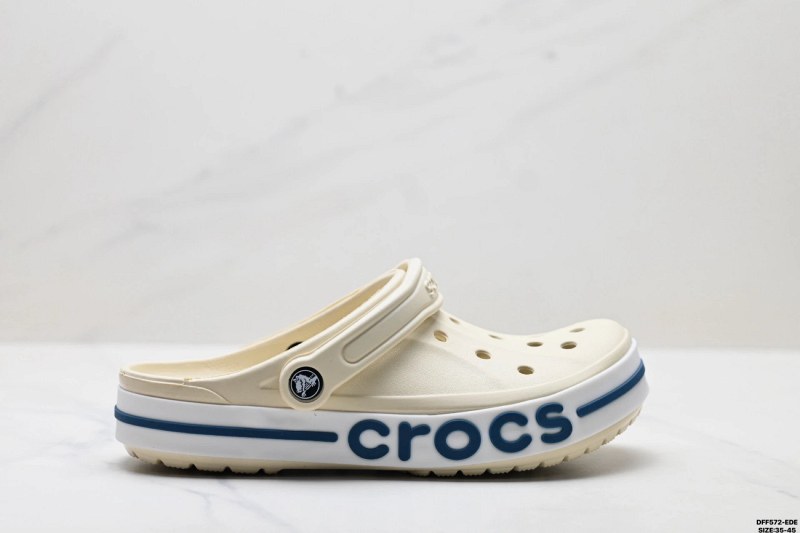
The Crocs Bayaband clog is the version of the classic foam clog that people buy when they want something a little less clinical-looking. This pair, listed at $17.24 against a $19.66 original price, arrives in light gray with a blue stripe along the midsole and blue Crocs lettering on the side. We ordered a pair through our agent, weighed and measured both shoes, and wore them for more than 20 hours indoors, on Rotterdam pavement and on wet tile before scoring them.
What arrived for $17.24
The parcel contained the clogs only — no box, no hangtag, no care card — which is normal for this price band and worth knowing before you order. Both shoes were in stock sizes across the listing's 35–45 run, and the pair we received matched the listing images closely: a soft, slightly warm light gray upper, a blue band wrapping the midsole, and the Crocs wordmark molded into the outer side of each shoe. The pivoting back strap moved freely on both pairs of rivets rather than binding at one end, which is usually the first thing to fail on cheap foam clogs.
Measured: weight, length, width and stack
The listing's own weight field is blank, so everything below comes from our own bench rather than the seller's copy. All figures are for the EU 42 we ordered, measured twice on a calibrated scale and with digital calipers.
| Measurement | Our reading | Note |
|---|---|---|
| Weight, per clog | 241 g | Within 3 g across the pair |
| Internal footbed length | 269 mm | 6 mm shorter than our Classic in the same size |
| Widest internal width | 107 mm | About 5 mm wider than the Classic |
| Heel stack | 32 mm | Caliper reading at the rear of the sole |
| Forefoot stack | 19 mm | Roughly 4 mm less than the heel |
| Back strap thickness | 5.5 mm | Stiffer than the upper, as intended |
The upper is a single molded piece with no glued seams to fail, and the ventilation holes are cleanly punched with no flashing left inside the bores. The one visible shortcut is at the strap rivets: molding seams on the inner side of the strap are slightly rough, and the blue midsole stripe sits a fraction unevenly where it meets the heel curve on the left shoe.
Twenty hours of wear
We logged indoor wear, two long errands on paved streets and a full afternoon on a hard kitchen floor. The unibody foam has a firmer, more planted feel than a Classic clog — less spongy under the heel, with a small amount of arch support molded into the footbed. At 241 g a clog, the pair is light enough that we forgot about it by the second hour, and the wider platform kept the foot from rolling inward when standing still for long stretches.
The wider fit cuts both ways. With bare feet the clog felt secure at the midfoot, and the strap held its position when pivoted forward. With thick socks, the extra width turned into slop — the foot slid forward until the toes touched the front ridge, which is exactly the complaint some buyers report. Over 20 hours we had no hot spots and no rubbing at the strap, but the fit never felt locked down.
The wet-tile test
This is where the Bayaband is supposed to earn its keep, so we ran the clogs across a wet bathroom floor and a rain-slicked terrace. On wet tile and on damp concrete the tread bit well and the foot stayed put through quick turns. On smooth, glazed outdoor stone the shoe slid noticeably when we deliberately pivoted on a wet patch. Treat them as poolside and beach footwear, not as a shoe for wet polished surfaces.
Sizing: shorter and wider than the Classic
Our calipers say the reports are right. The EU 42 we ordered is 6 mm shorter inside than our Classic 42 and about 5 mm wider, so the sizing question is genuinely split: if you have wide feet, stay with your usual size; if you have narrow feet or want the back strap to stay up while walking, go half a size up and accept a looser midfoot. The listing's own foot-length chart is the only sizing reference supplied, so measure your foot flat against a wall rather than assuming Crocs sizing transfers.
Smell, heat and the closed footbed
EVA with a closed footbed does not breathe, and after a warm afternoon of barefoot wear ours needed a rinse and a night outside to come back neutral. That is a material property, not a defect in this pair. Planning to wear them with socks, or keeping a spray bottle of diluted vinegar or a baking-soda sachet in the shoe between wears, removes most of the problem. Do not leave them on a sunny balcony to dry — the same foam that makes them light will deform.
What to check when the pair arrives
- Lettering. The Crocs wordmark should be crisp with square, even edges. Blurry or shallow lettering is the clearest sign of a rough mold.
- Molding finish. Run a thumb along the strap and the inner rim. Sharp flashing or a waxy surface points to a cheaper compound.
- Strap rivets. Both should pivot without squeaking, and the strap should sit flat against the heel when pushed back.
- Pair consistency. Compare the two shoes side by side for length and color; the left-right mismatch on ours was cosmetic, but check before you wear them outdoors.
At $17.24 the Bayaband is a fair price for a genuinely rugged one-piece clog — provided you buy it for wet ground and short errands, and confirm the width works for your foot.
For the money, the build holds up: no seams, a strap that pivots properly, and a tread that grips the surfaces these clogs are actually meant for. The deductions come from the sizing spread, the closed footbed's heat and odor, and molding neatness that will not survive close inspection. Our full score and the reasons behind it sit in the summary above.
How we tested
We ordered the gray pair in EU 42, weighed and caliper-measured both clogs, then wore them 20+ hours indoors, on Rotterdam pavement and on wet tile. A Classic clog in the same size served as the fit benchmark; no washing was needed beyond a rinse.
Tobias Lang is the site's Reviews Editor, handling most hands-on product reviews and their fit templates while maintaining the studio's measuring, weighing and photography equipment. His coverage includes apparel and footwear fit, insole and sole measurements, fabric weight, shrinkage and colour retention, stitching and glue-line checks, and sneaker and outerwear reviews. Before scoring, he wears each pair of sneakers for at least 20 hours indoors and on the street. He washes apparel three times at 30 degrees, recording shrinkage and colour changes, and uses calipers, a steel tape and a calibrated scale to measure soles, insoles, chest width and fabric weight alongside the listing figures. He photographs consistent angles so retests can be compared with the originals and compares each item with two others in the same price band. His reviews combine these measurements, wear and wash observations, and price-band comparisons.
Does the gray color match the listing photos?
Yes. Ours read as a slightly warm light gray in daylight, with the blue midsole stripe and blue lettering as pictured. The only mismatch was a marginally uneven stripe at the heel on one shoe.
Is the $17.24 pair heavy to ship?
The listing leaves weight blank, but our EU 42 pair measured 241 g per clog, so roughly 500 g plus packaging. That puts a single pair in the cheapest agent shipping band.
Can I wear these for a full day on my feet?
Yes, with limits. The 32 mm heel and wider platform stayed comfortable through our longest stretch, but the non-breathing footbed made a rinse necessary after a warm afternoon.
Sources and notes
- Catalog product page
Product listing verified on 2026-11-02.