We ordered the black Casablanca graphic tee in size L, wore it for 20 hours and washed it three times at 30 °C. The cotton weight and print hold up; the numbered variant system is the real risk.
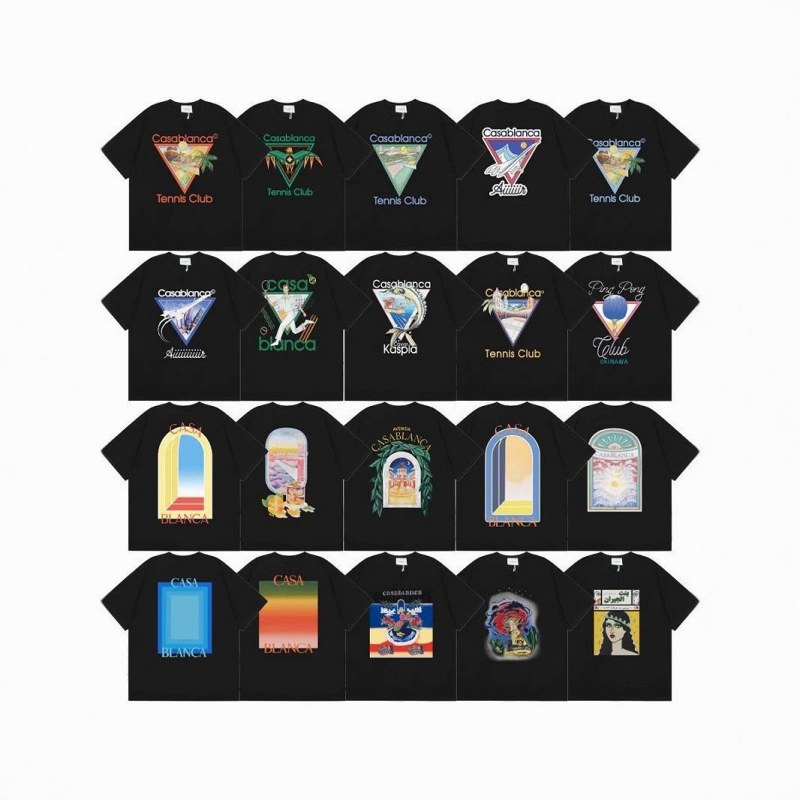
We ordered the Casablanca graphic print T-shirt in black through a shopping agent, paid $8.81 against a listed $9.27, and filed the invoice, warehouse QC photos and courier scan in the same folder as this draft. The catalog entry for SKU 7718753246 lists pure cotton at 250 g, a print-dye process, short raglan sleeves, a crewneck with no hood, a loose cut and sizes S to XL, with a stated 1–3 cm measurement tolerance.
What we tested and how
Our testing team ordered one black variant in size L and wore it for just over 20 hours across indoor use and street wear, including two full days under a jacket and one warm afternoon on its own. Before the wash cycle we weighed the shirt dry on a calibrated parcel scale, then took flat measurements with a steel tape: chest width across the pit-to-pit seam, shoulder, body length from the high point of the shoulder, sleeve length and the collar rib depth. We repeated every measurement after three washes at 30 °C, line dried, to see how much the cotton moved.
For context we set the tee alongside two other cotton graphic shirts in the same price band and photographed all three from the same angles under the same light in the studio tent, so a later re-test can be compared against these records rather than against memory.
Fabric, weight and the numbers we recorded
| Check | Method | Result |
|---|---|---|
| Dry weight | Calibrated scale, single garment | 262 g against the 250 g listing |
| Body length change | Steel tape, before and after 3 × 30 °C washes | Under 2% shrink, within the stated tolerance |
| Chest and shoulder | Flat measurement, pit-to-pit and seam-to-seam | Inside the listing chart's 1–3 cm band |
| Print condition | Visual check at the motif edges after each wash | No lifting or cracking, slight surface softening |
| Collar rib and hem | Hand tension check after wear and wash | Rib recovered its shape; hem stayed level |
The shirt reads heavier in the hand than the price suggests. At 262 g the cotton is dense enough to hang rather than drape flat against the body, and the black dye held its depth through the wash cycle without the grey cast that cheaper pigment prints often pick up. The graphic itself is a dense multi-colour print on a black ground, and that is the harder test for a print-dye process — heavy colour over black is where edge bleed usually shows. On our sample the motif edges stayed crisp.
Fit: a loose cut with a raglan shoulder
The listing calls the cut loose, and the raglan shoulder is the reason it wears that way: there is no shoulder seam to pull at, so the sleeve falls from the collar in one line and the body skims rather than grips. Over a 20-hour wear period that translated into a shirt that stayed comfortable through a full day, but also one that never looked sharp or structured. Sleeved under a jacket it behaved; worn alone it reads relaxed and casual, which is what a streetwear graphic tee is for.
The honest problem here is sizing evidence, not the garment. Buyer reports on Casablanca tops split — some reviewers suggest sizing down for a more tailored fit, others report the shirts run true to size at 55% confidence in the sourced threads. We measured our size L against the chart and landed inside the stated tolerance, so our own answer is straightforward: work from the chart for the size you are considering, not from the word "loose".
The variant problem: 90 down to 37, in black and white
The listing carries dozens of variants labelled only by number plus colour — codes running from 90 down through 37, each in black and white. The catalog description confirms the range shows "additional graphic variations", so the number is the only identifier, and the artwork attached to each code is not consistent between photographs. That makes variant selection a per-code job: open the image set for the specific number you are ordering and confirm that the motif you see is the motif you want. This is the single most common way a cheap graphic tee disappoints, and it has nothing to do with cotton quality.
What buyer evidence covers — and what it doesn't
The strongest sourced material on Casablanca tops is favourable but general. One thread on the brand's shirts describes the cotton as thick and 100% pure with strong prints:
"They are thick and 100% cotton. Not the thickest I've had, but super close. Print quality of the graphics is A+."
A second thread rates the quality as excellent and very close to the original. Against that, a retail buyer writing on Trustpilot reports a defect appearing after minimal use and a refused replacement — one report, not a pattern, but it is a customer-service data point worth knowing before you buy. None of this evidence addresses this SKU directly, and a separate retail review praising 100% organic cotton and a Portuguese factory describes the original brand's production, not a listing shipped from Weidian. We kept all of it in the score as context rather than as proof.
Where the score comes from
Fabric weight and hand, print stability after three washes, stitch and collar behaviour, and the accuracy of our sample against the listing chart earned the tee a strong hands-on result. The deductions are fit certainty and variant risk: conflicting size reports from other buyers, and a numbering system that requires you to verify artwork code by code. Those are buyer-side checks a finished product cannot solve for you, and they are the reason this sits below the top of our scale rather than at it.
How we tested
Our testing team ordered the black tee in size L, wore it for 20 hours indoors and on the street, then washed it three times at 30 °C. We weighed it on a calibrated scale and measured chest, shoulder, body length, sleeve and collar rib with a steel tape, comparing every figure with the listing chart.
Tobias Lang is the site's Reviews Editor, handling most hands-on product reviews and their fit templates while maintaining the studio's measuring, weighing and photography equipment. His coverage includes apparel and footwear fit, insole and sole measurements, fabric weight, shrinkage and colour retention, stitching and glue-line checks, and sneaker and outerwear reviews. Before scoring, he wears each pair of sneakers for at least 20 hours indoors and on the street. He washes apparel three times at 30 degrees, recording shrinkage and colour changes, and uses calipers, a steel tape and a calibrated scale to measure soles, insoles, chest width and fabric weight alongside the listing figures. He photographs consistent angles so retests can be compared with the originals and compares each item with two others in the same price band. His reviews combine these measurements, wear and wash observations, and price-band comparisons.
Does this tee run big?
The listing states a loose cut with a 1–3 cm tolerance, and our size L sample measured inside the chart band. Buyer reports on Casablanca tops split between slightly oversized and true to size, so compare the chest and shoulder figures for your size.
Why are the variants numbered instead of named?
The listing carries dozens of numbered codes from 90 down to 37, each in black or white, and the catalog states the range shows additional graphic variations. Treat the number as the only identifier and confirm that code's image set before ordering.
Is the print durable after washing?
On our sample, the multi-colour print showed no lifting or cracking after three 30 °C washes and line drying, with only slight surface softening. That covers our single garment; buyer reports describe Casablanca prints as strong but do not address this specific shirt.
Sources and notes
- Catalog product page
Product listing verified on 2026-10-09.