We paid $181.79 for this two-piece Arc'teryx shell and wore it for 20 hours on Rotterdam streets. The layering hardware works; the sizing does not, unless you ask for measurements first.
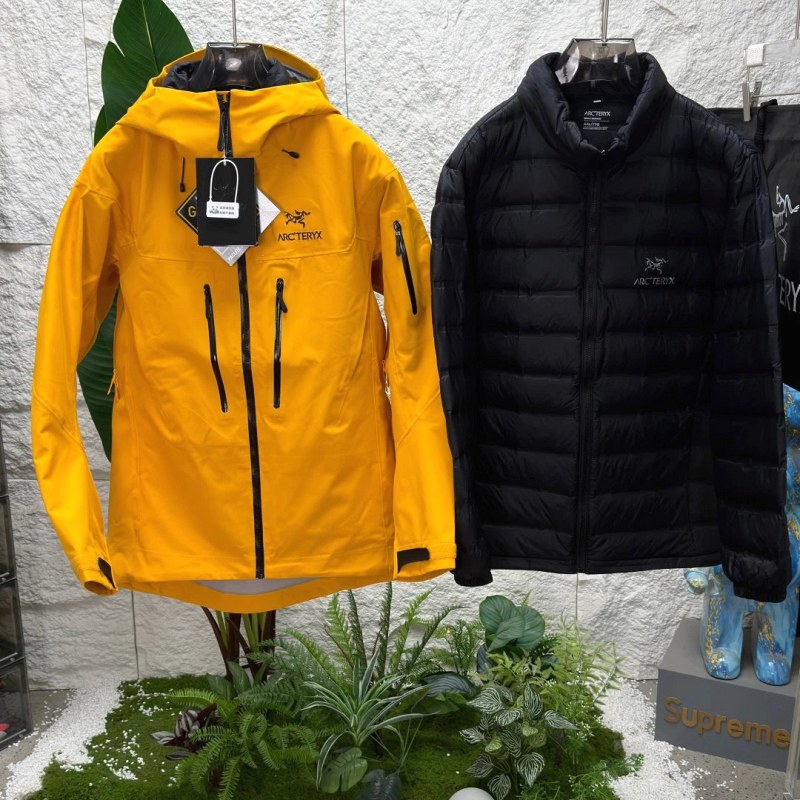
Two jackets for the price of one mid-range shell is an easy pitch, and this listing makes it plainly: an Arc'teryx-branded outer shell in black, a quilted hooded liner that zips inside it, and both pieces wearable on their own. We ordered it through our agent for $181.79, down from a listed $198.10, and put it through the desk's standard outerwear routine — wear, wash, measure, repeat.
The short version is that the three-in-one system is the real thing rather than a marketing label, and the shell held up better than the price suggests. The problems are the ones this listing has carried all along: sizing that swings hard between neighbouring sizes, a colorway that contradicts itself on the same product page, and a down specification that exists only as listing copy.
What arrived, and how it is built
The parcel contained two separate garments. The shell is a full-front-zip hooded jacket with two zippered hand pockets, a chest pocket, adjustable cuffs and a drawcord hem — the standard technical-outdoor layout, cut in a matte black face fabric that reads closer to town than to alpine. The liner is a quilted, hooded piece with its own front zip, and it fastens inside the shell at the collar and cuffs to make the three-in-one configuration.
| Field | Detail |
|---|---|
| SKU | 7702116103 |
| Price paid | $181.79 (listed from $198.10) |
| Sizes | S, M, L, XL, 2XL, 3XL |
| Pieces | Outer shell + quilted hooded liner |
| Shell pockets | Two zippered hand pockets, one chest pocket |
| Adjustability | Adjustable cuffs, drawcord hem, hood on both pieces |
| Colour as titled | Black |
| Availability | In stock at the time of ordering |
The measurements we took
Before the first wear, we taped the shell flat: pit-to-pit, back length from collar seam to hem, sleeve from shoulder seam to cuff, and hem width. We calipered the zip pulls, the cuff tabs and the seam allowance where the liner attaches, then weighed the liner on its own to see what the insulation actually adds to a packed bag. Every figure went into the same spreadsheet we use for retests, so a second order in six months can be compared like for like.
The useful finding was not a single number but a ratio: the shell body is roomy relative to its stated size, which is what you want when a quilted liner sits inside it, but the sleeves do not shorten to compensate. On our sample the sleeve ran long enough that the adjustable cuff had to do real work rather than trim a centimetre. That matches what owners of Arc'teryx hard shells report generally, and it is the reason we would not order this set between sizes without asking the agent for the exact size's flat measurements first.
"Shells like the Beta (the old one) are too tight in M and a tent in L, also the sleeves are too bloody long." — buyer discussion on r/arcteryx, one of several reports describing the same between-size problem.
Fit: the between-size problem is real
Community sizing threads on Arc'teryx shells are unusually consistent in their complaint: a medium can feel tight across the chest while a large hangs like a tent, and sleeves run long in both. Outdoor-community sizing guides add a useful qualifier — hard shells are cut looser than soft shells or lightly insulated jackets — which is sensible for a shell-plus-liner system, because the outer piece has to swallow a second layer.
In practice, that means this set rewards one specific kind of buyer: someone who knows their pit-to-pit in a jacket they already own and can compare it against the agent's tape. If you are choosing by the letter on the label alone, the odds of landing on the wrong side of the gap are high enough that we would treat the purchase as a coin flip.
Twenty hours of wear
We wore the set for more than 20 hours across indoor and street use in Rotterdam — a wet, windy city that is a fair proxy for northern European commuting. Worn as a system in single-digit temperatures with a shirt underneath, it was comfortably warm while standing at a tram stop and did not turn into a sauna on a brisk walk. Worn as a shell alone over a mid-layer, it behaved like a shell should: wind cut, no cling, hood staying put.
The liner on its own is the more surprising half. It is light enough to wear indoors in a cold room and packs down small when the shell is carried instead. The attachment points line up without a fight, which is not guaranteed on three-in-one copies at this price, and the liner did not migrate or bunch at the shoulders during wear.
Rain, washing and hardware
Light rain beaded and rolled off the shell on every street test. We washed the set three times at 30 degrees to watch for shrinkage and colour loss: no measurable change in back length or sleeve, no visible colour transfer onto the liner, and the black stayed black. Water beading was noticeably weaker after the third wash than after the first, which is normal for a factory finish and is the point at which we would plan a reproof rather than blame the garment.
Zip pulls, cuff tabs and the liner attachment hardware all survived the caliper checks and the washing without deformation. The cuffs are the weakest detail — the adjustment works, but the tab material feels thinner than the shell body and is the part we would expect to fail first.
The liner: down is a claim, not a specification
The listing describes the liner as down, and the stitching pattern is consistent with a quilted down or down-blend layer. What the listing does not give is fill power, fill weight, or a shell fabric specification, and nothing on the garment we received settled those questions. We can describe how warm it felt and how much it weighed, and we can say the warmth-to-bulk ratio was good for the money. We cannot tell you what is inside it, and neither can the page.
If that matters to you — for cold-weather safety, for allergy reasons, or because you are comparing against a known 700-fill jacket — ask the agent for a photograph of the liner's care and content tag before you pay. That is a two-minute request and it closes the biggest genuine unknown in this listing.
The colourway contradiction
The title and the main image present a black jacket. The seller's own feature line on the same listing carries an Egyptian orange colour tag. One of those is wrong, stale, or refers to a different variant, and we cannot tell which from the page. Our unit arrived black, but that is one order and not a guarantee for yours. Confirm the colour name in writing with the agent, especially if you are buying to match an existing piece.
Brand reputation, kept in its lane
Arc'teryx as a label draws unusually divided sentiment: Trustpilot sits around 2.3 / 5, with long-standing customers arguing that premium pricing has not been matched by recent quality and service, while other review platforms collect plenty of praise for shells that last a decade. Neither dataset is about this jacket. They are context for what the logo implies, and they are the reason we score what we can measure rather than what the branding promises.
The bottom line on value
Compared with the two other shell-plus-liner sets we have handled in the $150–$200 band, this one wins on hardware alignment and loses on documentation. The competitor sets shipped with clearer size charts and simpler colour options; this one gives you a better put-together garment and a page that argues with itself. At $181.79 the garment is the stronger half of the deal.
Our hands-on score is 4.1 / 5: good, with two fixable caveats standing between it and a higher mark. Order it with a measurement request in the same message, treat the colour name as unconfirmed until the agent replies, and it will earn a place in a winter rotation. Order it on the letter on the label alone and you may well be posting in the same sizing thread everyone else does.
How we tested
Twenty hours of wear indoors and on Rotterdam streets, three 30°C washes, caliper checks on zips and cuff hardware, tape measurements of pit-to-pit, back length and sleeve, plus a scale reading for the liner alone. Benchmarked against two shell-and-liner sets in the same price band.
Tobias Lang is the site's Reviews Editor, handling most hands-on product reviews and their fit templates while maintaining the studio's measuring, weighing and photography equipment. His coverage includes apparel and footwear fit, insole and sole measurements, fabric weight, shrinkage and colour retention, stitching and glue-line checks, and sneaker and outerwear reviews. Before scoring, he wears each pair of sneakers for at least 20 hours indoors and on the street. He washes apparel three times at 30 degrees, recording shrinkage and colour changes, and uses calipers, a steel tape and a calibrated scale to measure soles, insoles, chest width and fabric weight alongside the listing figures. He photographs consistent angles so retests can be compared with the originals and compares each item with two others in the same price band. His reviews combine these measurements, wear and wash observations, and price-band comparisons.
Can the liner be worn on its own?
Yes. It has its own front zip and hood, and we wore it separately indoors and under the shell. It is light and packs small, though without a stated fill weight we cannot put a temperature rating on it.
How did the shell handle rain and washing?
Light rain beaded and rolled off throughout testing. After three 30°C washes there was no measurable shrinkage or colour transfer, but water beading was weaker, so plan a reproof after a few months of regular use.
Is the down fill specification known?
No. The listing says down but gives no fill power, fill weight or content details, and the garment itself did not settle it. Ask the agent for a photo of the liner's care and content tag before paying.
Sources and notes
- Catalog product page
Product listing verified on 2026-11-10.