We ordered the $18.36 Amiri black crew-neck, measured every dimension flat and washed it three times at 30 °C to settle the true-to-size question.
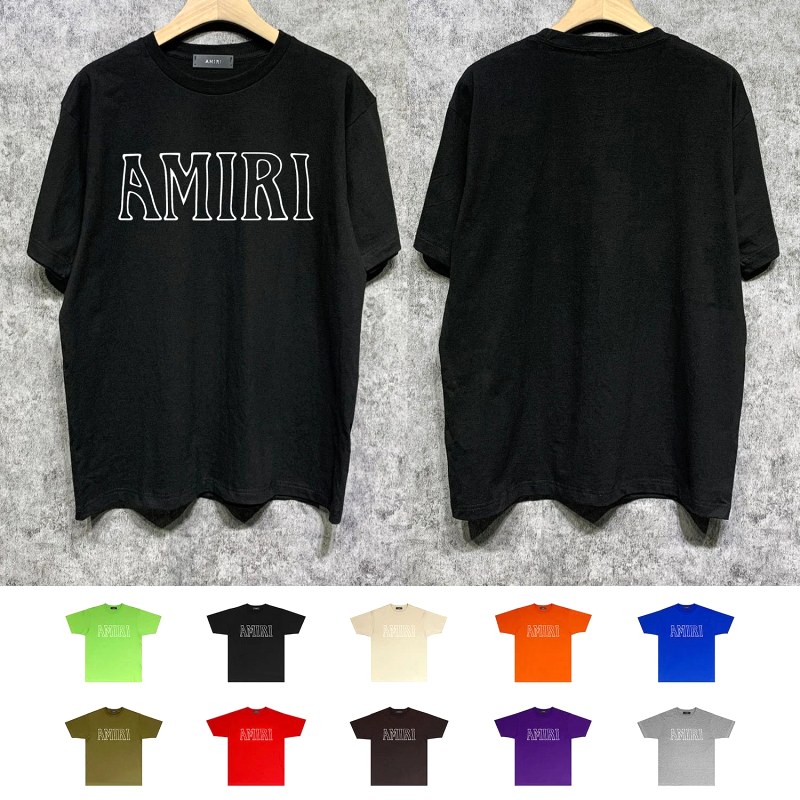
Almost every argument about a cheap black graphic tee comes down to one decision made before the parcel leaves the warehouse: which size to pick. That is especially true here, because the two most useful pieces of sizing evidence we could find point in opposite directions. Buyers on r/DesignerReps describe Amiri tees as generally true to size, while a retailer sizing guide advises going up a size for a looser feel. Rather than pick a side, we ordered a size M, laid it flat, and compared our numbers with the listing's own chart.
What we ordered
The listing is SKU 7705036816, priced at $18.36 against a $19.84 reference, in stock, and sold under the Amiri name. The specification sheet describes a 100% cotton pullover with a round neckline, short regular sleeves, a loose cut, a centred outlined lettering graphic applied by printing or dyeing, and a 250–300 gsm fabric weight. Sizes run S to XL with a stated ±2 cm tolerance, and the colour list is unusually deep — the black family alone covers more than a dozen codes. We ordered the black 715 variant, which is the one shown in the product photography, and the parcel arrived with the shirt folded in a plain poly bag, no hangtag, and the neck label printed rather than woven.
Three members of the testing team handled the shirt at different stages: one logged the flat measurements with a steel tape, one wore it for street days and desk hours, and one ran the wash cycles. Any dimension below is a single-garment measurement, so treat a centimetre either way as normal production spread rather than a defect.
The fit question, measured
The shirt is cut loose, but loose in the way a boxy 1990s tee is loose — the shoulder seam sits slightly off the shoulder bone and the body falls straight rather than tapering at the waist. Our size M measured as follows against the chart attached to this listing.
| Measurement (size M, flat) | Our tape | Listing chart | Difference |
|---|---|---|---|
| Chest, pit to pit | 54.0 cm | 52.0 cm | +2.0 cm |
| Body length, high point shoulder | 70.0 cm | 71.0 cm | −1.0 cm |
| Shoulder, seam to seam | 47.0 cm | 46.0 cm | +1.0 cm |
| Sleeve, shoulder to hem | 21.5 cm | 22.0 cm | −0.5 cm |
| Hem width | 53.0 cm | 52.5 cm | +0.5 cm |
| Garment weight | 249 g | 250–300 gsm stated | Within band |
Read those differences together and the true-to-size argument wins on the body: this is not a vanity-sized garment that runs a full size small. The chest sits at the outer edge of the stated tolerance, which is why it feels roomier than the chart suggests, but a size up would have pushed the shoulder past 49 cm and the body past 73 cm — genuinely oversized rather than relaxed. If you want the drape in the product photos, stay with your usual size. If you want a deliberately oversized streetwear silhouette, the size-up advice from retailers is sound, but understand you are buying a different look, not correcting a fit error.
Fabric, print and surface feel
At 249 g the shirt lands at the lower end of a mid-weight jersey rather than the heavy loopback feel some buyers hope for from a 250–300 gsm claim. It has enough body to hold the chest print flat without puckering and enough drape to fall cleanly off the shoulders. Under a daylight lamp the lettering graphic reads as a thin outlined motif with slightly soft edges at the tightest curves; there is no visible haloing or cracking at the fold lines after wear. The surface has a light peach finish that dulls the black slightly, which is normal for garment-dyed cotton and will fade further with washing.
Inside, the neck seam is taped, the side seams are overlocked, and the hem is a double-needle stitch with even spacing. The ribbing at the collar is on the thin side — it recovered after each wash but started slightly wavy after the third cycle.
Three washes at 30 °C
Our standard apparel protocol is three machine washes at 30 °C, and we followed it here with one addition: the first wash was a separate cold hand-wash, because a single buyer account on r/DesignerReps describes a lot of black dye coming out of an Amiri tee and a metallic smell developing after a few months. We wanted to see the dye for ourselves before the shirt went anywhere near a mixed load.
- Wash one, cold by hand: the water darkened noticeably within a minute and the rinse water stayed grey for three changes. That matches the buyer report and is the strongest argument for washing this shirt alone the first few times.
- Washes two and three, 30 °C machine: colour release dropped sharply. Shrinkage measured under 1 cm in body length and under 0.5 cm in the chest, and the hem stayed square with no visible twist.
- Smell: no metallic note at any point in our test period. We cannot reproduce a problem that one buyer reported after months of wear, so we record it as an open question rather than dismiss it.
The listing claims breathability, wrinkle resistance, moisture wicking and high colour fastness. Fabric performance in warm indoor conditions was acceptable — no clamminess across a full working day — but those are catalog claims and our three washes are not a fastness test. Anyone pairing this with white trousers or a light jacket should treat the first few wears as a transfer risk.
Where the doubts remain
The colour list is the biggest unresolved variable. With dozens of black, white, blue and beige codes attached to one listing, print placement, fabric batch and even blank supplier can differ between variants; the shirt we measured is the 715 black, and it is not safe to assume every code behaves the same. The second doubt is the printed label: with no woven tag or packaging, nothing in the parcel independently ties the garment to the brand beyond the listing.
The shirt earns its price on fabric weight, stitch quality and a clean print. It does not earn blind trust on colourfastness, and the first wash is where you find out.
Our score reflects a garment that measured close to its own chart, survived three washes without distorting, and came in at the lower edge of its stated fabric weight. The dye release and the unresolved smell report are the reasons it does not score higher.
How we tested
Ordered a size M in black 715, laid it flat with a steel tape against the listing chart, wore it across mixed street and desk days, then ran one cold hand-wash and three 30 °C cycles, logging shrinkage, hem twist, colour release and collar recovery. Single-garment measurements.
Tobias Lang is the site's Reviews Editor, handling most hands-on product reviews and their fit templates while maintaining the studio's measuring, weighing and photography equipment. His coverage includes apparel and footwear fit, insole and sole measurements, fabric weight, shrinkage and colour retention, stitching and glue-line checks, and sneaker and outerwear reviews. Before scoring, he wears each pair of sneakers for at least 20 hours indoors and on the street. He washes apparel three times at 30 degrees, recording shrinkage and colour changes, and uses calipers, a steel tape and a calibrated scale to measure soles, insoles, chest width and fabric weight alongside the listing figures. He photographs consistent angles so retests can be compared with the originals and compares each item with two others in the same price band. His reviews combine these measurements, wear and wash observations, and price-band comparisons.
Should I size up in this Amiri black T-shirt?
Our size M measured 54 cm across the chest against a 52 cm chart figure, so the body already runs roomy. Stay with your usual size for the photographed drape; size up only if you want a deliberately oversized look.
Will the black dye bleed onto other clothes?
Our first cold hand-wash released a lot of colour, matching one buyer report. Colour release dropped sharply by the third wash, so wash it separately in cold water for the first few cycles before mixing loads.
Is the 250–300 gsm fabric weight accurate?
Our size M weighed 249 g, which puts the jersey at the low end of the stated band rather than the heavy side. Treat it as a mid-weight tee, and note the figure is our own single-garment weight, not a mill test.
Sources and notes
- Catalog product page
Product listing verified on 2026-10-18.